
Last Updated: November 12, 2026
Quick Summary
Reliable gear for first responders starts with a role-specific checklist built from the incidents you actually run, then buying to that list. Verify that each item names a specific standard, such as NFPA 1971 or NIJ level, on a permanent product label rather than only in the marketing copy. Confirm the certification is current and matches your assignment before you commit.
- Build your equipment list from the incidents you actually run, then buy to that list.
- NFPA 1971 covers structural fire fighting ensembles tested as a system.
- A vest marketed as tactical without a stated NIJ level is a carrier, not rated armor.
- Inspect medical kits monthly and after every use, replacing opened or expired items.
- Compare cost per year of service, not sticker price, when budgeting for gear.
Table of Contents
- Start with Role-Specific Gear Checklists for First Responders
- Tactical Gear Durability Standards: What NFPA and Field Testing Actually Require
- Professional-Grade vs Consumer Outdoor Gear: Key Differences That Matter
- Essential Medical Kits and Emergency Supplies for First Responders
- Footwear, Apparel, and PPE: Building a Durable Duty Uniform
- First Responder Equipment Maintenance Tips for Long-Term Readiness
- Shop Vetted Reliable Gear at Grayman Trading Company
- Frequently Asked Questions
Start with Role-Specific Gear Checklists for First Responders
Reliable gear for first responders starts with a role-specific checklist, not a catalog. A paramedic, firefighter, patrol officer, and SAR volunteer face different hazards, carry different loads, and answer to different standards.
Generic "first responder gear" wastes money: a patrol-sized tactical vest is dead weight on an EMS call, and structural turnout gear is overkill for a wilderness SAR pack.
| Role | Priority Gear | Skip or Deprioritize |
|---|---|---|
| EMS / paramedic | Jump bag, airway kit, BLS supplies, duty boots, gloves | Heavy turnout gear, rifle-rated plates |
| Fire rescue | Turnout gear, flame-resistant hood, helmet, protective gloves | Lightweight EDC medical pouches |
| Law enforcement | Duty uniform, tactical vest, duty belt, flashlight | Wildland fire shelters |
| Search and rescue | Layered outdoor apparel, navigation, medical kit, pack | Ballistic plates for non-tactical missions |
Build your list from the incidents you actually run, then buy to that list. That single habit separates a mission-ready kit from a closet full of unused equipment.
Tactical Gear Durability Standards: What NFPA and Field Testing Actually Require
Durability claims mean little without a standard behind them, and most buying guides stop at the word "certified." The useful question is which standard, tested by whom, and how you confirm it on the item in your hands. The National Fire Protection Association publishes the consensus codes that govern much of the protective equipment used in public safety, and those codes are the clearest benchmark buyers have. NFPA standards and codes overview covers the full catalog, from turnout gear to protective clothing.
The standards that actually show up on public-safety gear
You do not need to memorize the whole catalog, but you should recognize the ones that appear on labels in this market:
- NFPA 1971 covers structural fire fighting protective ensembles, turnout coats, pants, helmets, gloves, and footwear tested as a system.
- NFPA 1977 covers wildland fire fighting clothing and equipment; it is not a substitute for structural gear.
- NFPA 1999 covers emergency medical protective clothing, including garments and gloves for EMS exposure to blood and body fluids.
- NFPA 1951 covers technical rescue protective ensembles, the category most relevant to SAR and rescue-task gear.
- NFPA 1983 covers life safety rope and system components, the standard behind rescue harness and rigging hardware.
- ANSI/ISEA 107 is the high-visibility apparel standard behind reflective vests and trim, grading garments by class rather than pass/fail.
- NIJ ballistic standards govern body armor, with levels describing what a plate or soft panel is tested to stop. A vest marketed as "tactical" without a stated NIJ level is a carrier, not rated armor.
For fire-resistant apparel, flame-resistant clothing, and turnout gear, look for a label naming the specific standard the item was tested to, not a vague "meets safety standards" line. The same applies to protective helmets and gloves: a readable certification beats any product-description claim.
How to verify compliance before you buy
A standard on a web page is marketing; a standard on the product is a claim you can check. Work through these in order:
- Find the standard number and edition year. The edition year shows the design was tested against a known revision, not an obsolete one.
- Identify the testing body. Third-party certification from a recognized laboratory outweighs self-declaration; if the listing doesn't say who tested it, assume self-declared.
- Check the label, not the listing. Certification belongs on a permanent product label or tag; if it only appears in the description, ask the seller for the label image.
- Confirm the certification is current. Certifications can lapse or be withdrawn; a reputable maker or dealer can produce a current certificate on request.
- Match the standard to the task. A 1977 wildland garment does not satisfy a structural fire assignment, and an ANSI Class 2 vest is not a substitute for a 1971 ensemble.
Watch out: a product can carry a legitimate standard number and still be the wrong class or level for your assignment, verify the specific class, level, or edition, not just the standard's name.
What field testing adds that a lab cannot
Standards test for defined hazards under controlled conditions. Field experience can add context, but only if you read it critically. Ask three questions before buying:
- Does the listing name the standard and the testing body?
- Is the certification on the product label, not just the marketing copy?
- Do reviews describe real duty use, or only unboxing impressions?
Construction details are a second layer of evidence. Look for stress points, hardware, and webbing that suit the load, and check for replaceable components. A named manufacturer, a written warranty, and a reachable support channel complete the picture.
If you want a deeper comparison of lighting tools built to take abuse, our guide to the best tactical flashlights breaks down beam patterns, mounting, and durability.
Professional-Grade vs Consumer Outdoor Gear: Key Differences That Matter
Professional-grade and consumer outdoor gear often look identical on a product page; the differences show up in materials, construction, and how the maker handles failure.
Here is what to look for when separating the two:
- Stitching and hardware: Bar-tacked stress points, metal buckles instead of plastic where load matters, reinforced webbing at attachment points.
- Materials: Fabrics and coatings rated for the hazard, not just described as "heavy duty."
- Serviceability: Replaceable straps, modular panels, and swappable pouches rather than a sealed unit you throw away.
- Accountability: A named manufacturer, a real warranty, and a way to reach support.
A common mistake is paying professional prices for gear that was never built to a professional standard. The label matters less than the certification and construction details behind it.
Essential Medical Kits and Emergency Supplies for First Responders
A medical kit is the one piece of gear where "good enough" is never good enough. Field medical equipment has to work the first time, in the dark, with one hand, under stress.
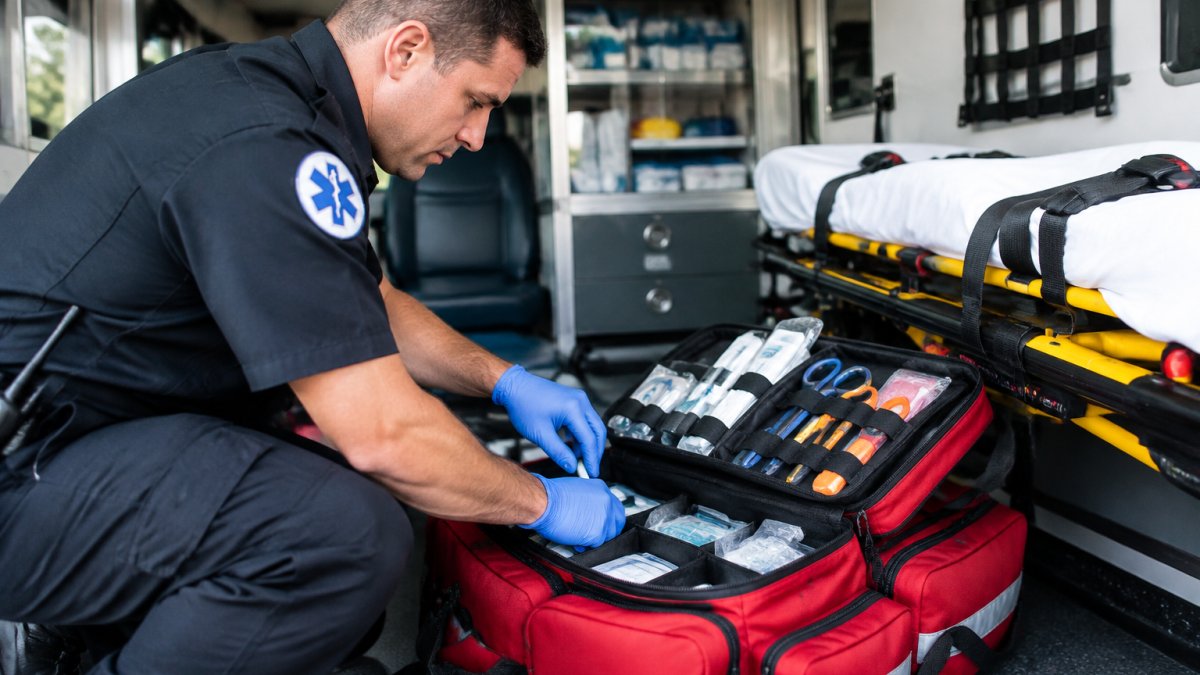
The My Medic Recon Emergency Medical Kit carries over 200 life-saving supplies in a modular, flat-lay layout with quick-access front pockets for trauma items, and it ships with a free life-saving training course.
If you are stocking a kit from scratch, our roundup of the best tourniquets for survival kits covers what to look for in the single most important item in the bag. Readers who want a ready-made compact kit can shop the Grayman IFAK Compact directly.
Footwear, Apparel, and PPE: Building a Durable Duty Uniform
Personal protective equipment is a system, and it fails at the weakest layer.
Heat and flame protection belong to flame-resistant clothing rated to the applicable standard; impact protection belongs to helmets and gloves with a stated test rating.
Fit and compatibility deserve more attention than they get. A tactical vest has to sit correctly over your uniform and under your pack straps, gloves need enough dexterity to work a radio, and boots must match the terrain and shift length.
First Responder Equipment Maintenance Tips for Long-Term Readiness
First responder equipment maintenance is a schedule, not an intention. Gear that sits unchecked is gear that fails when it is needed. The practical frame is a lifecycle: inspect on a fixed cadence, log what you find, retire on condition rather than on a hunch, and budget for replacement before the failure happens.
Inspection and replacement schedule
| Item | Check Frequency | What to Inspect | Replace When |
|---|---|---|---|
| Medical kit | Monthly and after every use | Seals, expiration dates, tourniquet condition, glove integrity | Any opened, expired, or compromised item |
| Duty boots | Weekly | Sole wear, waterproofing, stitching, toe and heel structure | Sole worn through, seam failure, or loss of support |
| Flashlight | Before each shift | Battery, lens, switch, mounting, O-ring seals | Beam dims, switch sticks, or water intrusion appears |
| Turnout gear | After each use, deep check quarterly | Contamination, tears, reflective trim, closure hardware | Damage beyond repair or contamination that cannot be cleaned |
| Tactical vest | Monthly | Straps, buckles, panel integrity, carrier stitching | Cracked hardware, frayed webbing, or compromised panels |
| Rope and rigging | Before and after each use | Cuts, glazing, abrasion, hardware function | Any cut, glazing, or hardware deformation |
What to actually look for during an inspection
A checkbox inspection is only as good as the criteria behind it. For soft goods, webbing, straps, carriers, bags, run a hand along the full length and look for fuzzing, abrasion, and pulled threads at stress points, and check bar-tacks and box-X stitches for broken thread. For hardware, open and close every buckle and zipper under load; a buckle that releases under tension is a failure waiting for a bad moment.
Watch out: gear that passes a visual check can still fail functionally, cycle every buckle, zipper, and switch under load during inspection, not just at purchase.
Storage that protects the investment
A common mistake is storing gear damp. Moisture is the quiet enemy of webbing, zippers, and electronics. Dry everything before it goes back in the bag, and store kits where temperature swings are mild. Keep medical kits out of direct sun and away from vehicle heat extremes, which degrade adhesives and sterile packaging faster than the expiration date suggests. Hang soft goods where air can move around them rather than compressing them in a sealed bin.
Budgeting for the full lifecycle
Reliable gear is a total-cost decision, not an upfront-price decision. Consumables, medical supplies, batteries, gloves, replacement filters, recur on a predictable cadence, and a kit using common, easily sourced consumables costs less to keep ready than one locked into proprietary refills. Replaceable straps, modular pouches, and serviceable hardware extend the useful life of an item that would otherwise be retired whole.
Protecting that investment starts with how you store it. Our guide to the best aluminum gear storage cases covers hard-sided options for organizing and shielding equipment between calls.
Shop Vetted Reliable Gear at Grayman Trading Company
We are a family-owned shop with direct brand partnerships and full warranties, carrying field-tested equipment built for demanding conditions.
Our catalog covers the categories above: medical kits, tactical lighting, packs, and storage. The Streamlight TLR-1 HL 1000 Lumen FDE Tactical Light is a 1000-lumen, IPX7-rated rail-mounted light.
First responders, military personnel, and nurses can verify eligibility through GOVX ID. If you are ready to buy, check your military and first responder discount before checkout.
The hardest part of outfitting a first responder is not finding gear. It is knowing which gear will still work on the worst day of the year.
Frequently Asked Questions
What criteria define reliable gear for first responders?
Reliable gear for first responders must meet three core criteria: durability under repeated stress, compliance with relevant safety standards like NFPA for fire-resistant apparel, and field-tested performance in real emergency scenarios. Look for reinforced stitching, water-resistant materials, and modular designs that let you access critical items quickly. Brands that offer warranties and direct partnerships with manufacturers also signal accountability. Avoid gear that only lists vague claims without specific certifications or material specs.
How do you distinguish between professional-grade and consumer-grade tactical gear?
Professional-grade gear is generally built with heavier-duty materials and reinforced construction. Check product listings for the specific certifications and specifications the item was tested to.
What are the essential components of a reliable first responder loadout?
A reliable loadout starts with personal protective equipment (PPE) including gloves, eye protection, and flame-resistant clothing. Next, carry a well-stocked medical kit with tourniquets, chest seals, and airway supplies. Add duty boots with slip-resistant soles, a durable flashlight or weapon light, and a tactical vest or duty belt for secure equipment storage. Communication devices and a backup power source are also critical. Tailor the loadout to your role, such as EMS, fire rescue, or law enforcement, and inspect each item regularly.
How can first responders identify reputable retailers for mission-critical gear?
Look for retailers that offer direct brand partnerships with full warranties. Reputable retailers provide product specifications and clear return policies. Check for family-owned businesses that prioritize personal service over volume sales. Reading customer reviews and asking about field-testing procedures can further confirm a retailer's credibility.

