
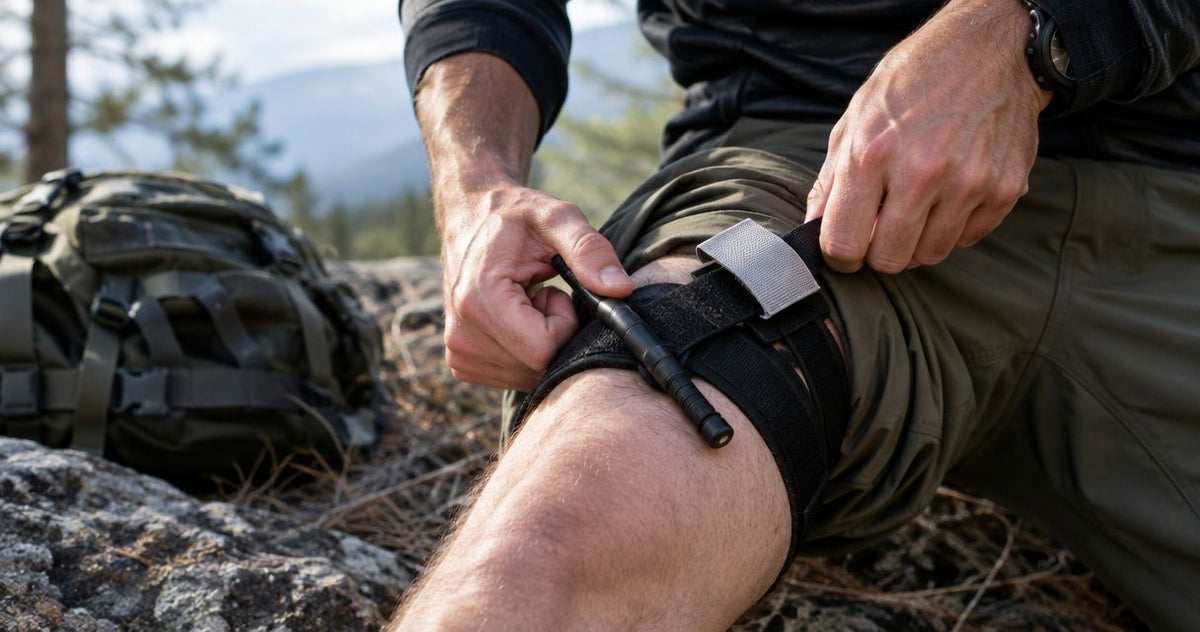
Best overall: the C-A-T Gen 7. Best for compact-fold carry: the SOF Tourniquet. Best for buckle-assisted initial tension: the SAM XT. This 2026 guide compares these extremity tourniquets for survival kits, with the C-A-T Combat Application Tourniquet as the default recommendation for a buyer who will train with it.
- The C-A-T Combat Application Tourniquet is the default survival-kit pick; practice matters more than adding extra features.
- The SOF Tourniquet suits compact-fold carry, but its buckle and windlass retention require model-specific practice.
- The SAM XT uses a locking buckle to help establish initial tension; the windlass still supplies final tightening.
- Choose a traceable supplier, keep a separate training device, and carry emergency equipment where you can reach it.
Why this matters
A tourniquet buried beneath your shelter and cooking gear is hard to reach when you need it. A device you have never practiced with creates another problem: you must learn its buckle and retention system during an emergency.
For Grayman Trading Company readers building a survival kit, the C-A-T Gen 7 is the best default tourniquet. Its windlass design gives you a straightforward starting point for training and kit planning. The alternatives below solve more specific carry or tensioning problems.
If you are considering the Grayman IFAK Compact, check its listed contents rather than assuming a tourniquet is included. Choose the medical equipment first, then arrange the kit around access.
This is buying guidance, not a substitute for hands-on bleeding-control instruction. For active, life-threatening bleeding, call 911 and follow emergency-dispatch instructions.
What makes the best survival-kit tourniquet?
The useful comparison in 2026 is not which device looks most tactical. It is which device you can identify, reach, tighten, and secure correctly.
- Traceable sourcing: Buy through the manufacturer or a supplier whose authorization you can verify. Packaging and a familiar-looking shape do not establish authenticity.
- Initial tension: Removing strap slack matters. Compare how each buckle helps you establish tension before using the windlass.
- One-handed handling: Practice reaching and applying your chosen device with either hand under qualified supervision.
- Windlass retention: Tightening is only part of the task. You must also secure the windlass using that model's retention system.
- Carry access: Choose a location that does not require emptying your pack. Protect the device from damage while keeping it reachable.
- Training consistency: Use the same model for practice and emergency carry, but keep the training unit separate.
Do not choose by strap width alone. The C-A-T Gen 7 has a 1.5-inch band, according to its manufacturer; that specification does not tell you whether you can operate its buckle with your nondominant hand.
Best tourniquets at a glance
These recommendations compare operating designs, not results from a head-to-head clinical trial. Manufacturer instructions remain the authority for applying each device.
| Tourniquet | Best for | Standout feature | Key limitation |
|---|---|---|---|
| C-A-T Gen 7 | Default survival-kit setup | Single-routing buckle and windlass retention clip | Loose initial routing still undermines application |
| SOF Tourniquet | Compact-fold carry | Flat-folding design with an aluminum windlass | Different buckle and retention sequence from the C-A-T |
| SAM XT | Buckle-assisted initial tension | TRUFORCE buckle locks when sufficient initial force is applied | Buckle engagement does not replace final tightening |
For a new survival kit in 2026, start with the default unless you have a specific reason to choose another design. Existing training is a good reason. Matching a pouch color is not.
1. C-A-T Gen 7: best survival-kit tourniquet for a default setup
The C-A-T Gen 7 uses a strap, a single-routing buckle, and a windlass to tighten around an injured limb. You secure the windlass in a retaining clip and use the securing strap to cover it.
The practical advantage is a direct operating sequence. Pull the strap tight, use the windlass, then secure it according to the manufacturer's instructions. That does not make application automatic; leaving slack in the strap creates extra work for the windlass.
C-A-T Gen 7 pros
- The single-routing buckle avoids choosing between different routing paths during application.
- The windlass clip provides a defined place to secure the rod after tightening.
- The securing strap includes a place to record application time.
- The manufacturer provides model-specific instructions and training material.
C-A-T Gen 7 cons
- The windlass cannot compensate for careless initial strap preparation without additional tightening.
- Correct windlass retention remains a separate task after bleeding control.
- Recognizing the general shape is not enough to verify a genuine device.
Best for: You want a clear starting point for a personal survival kit and will practice the complete application sequence.
Keep the emergency unit in a dedicated location. Repeatedly opening, tightening, and repacking that same unit during practice adds handling and wear to equipment you intend to reserve for an emergency.
For Grayman Trading Company survival-kit readers, this is the default recommendation because it provides a straightforward baseline—not because every other design is unsuitable. Buy verdict: choose a genuine C-A-T Gen 7 and a separate training unit.
2. SOF Tourniquet: best survival-kit tourniquet for compact-fold carry
The SOF Tourniquet from TacMed Solutions uses an aluminum windlass and a buckle that allows the strap to open. Its flat-folding design makes it a useful option when the way a device packs matters to your carry setup.
The tradeoff is procedural. The SOF Tourniquet is not a C-A-T with a different rod; learn its buckle operation and windlass retention as a separate system.
SOF Tourniquet pros
- The flat-folding design supports compact organization in a dedicated carrier.
- The opening buckle provides an alternative to passing a closed loop over a limb.
- The aluminum windlass gives the device a different construction from the C-A-T's windlass.
- Manufacturer instructions address its specific application and retention sequence.
SOF Tourniquet cons
- C-A-T practice does not establish proficiency with the SOF buckle and retention system.
- Compact folding does not guarantee easy access once the device is inside a pocket or pouch.
- Packing the strap too tightly around other gear can make deployment awkward.
Best for: You specifically need a flat-folding carry arrangement and are willing to train on the SOF operating sequence.
Check the folded device inside the carrier you actually intend to use. Remove it with either hand and confirm that the carrier does not trap the buckle or windlass. Do this with your training unit rather than repeatedly disturbing your emergency unit.
Buy verdict: choose the SOF Tourniquet for a deliberate compact-carry setup, not simply to reduce visible bulk.
3. SAM XT: best survival-kit tourniquet for buckle-assisted tension
The SAM XT uses the manufacturer's TRUFORCE buckle to help establish initial strap tension before windlass tightening. The buckle locks when sufficient pulling force activates its mechanism.
That feature addresses a real application problem: leaving slack before turning the windlass. It does not verify that bleeding has stopped, and it does not remove the need to secure the windlass correctly.
SAM XT pros
- The locking buckle gives feedback during the initial tensioning stage.
- The design directly addresses slack removal before windlass use.
- Windlass tightening remains a distinct step after buckle engagement.
- Model-specific manufacturer instructions explain the buckle's operation.
SAM XT cons
- Buckle engagement is not evidence that the application is complete.
- The additional mechanism requires its own practice and inspection.
- A user trained only on another model must learn a different initial-tension sequence.
Best for: You want a mechanical cue during initial strap tensioning and will practice the entire SAM XT sequence.
Handle a training example before committing to a carrier. Confirm that you understand what the buckle signals and what it does not. Treat the device as a complete system rather than buying it for the buckle alone.
Buy verdict: choose the SAM XT when its tensioning feedback fits your training, not as a substitute for instruction.
Carry setup matters as much as the model
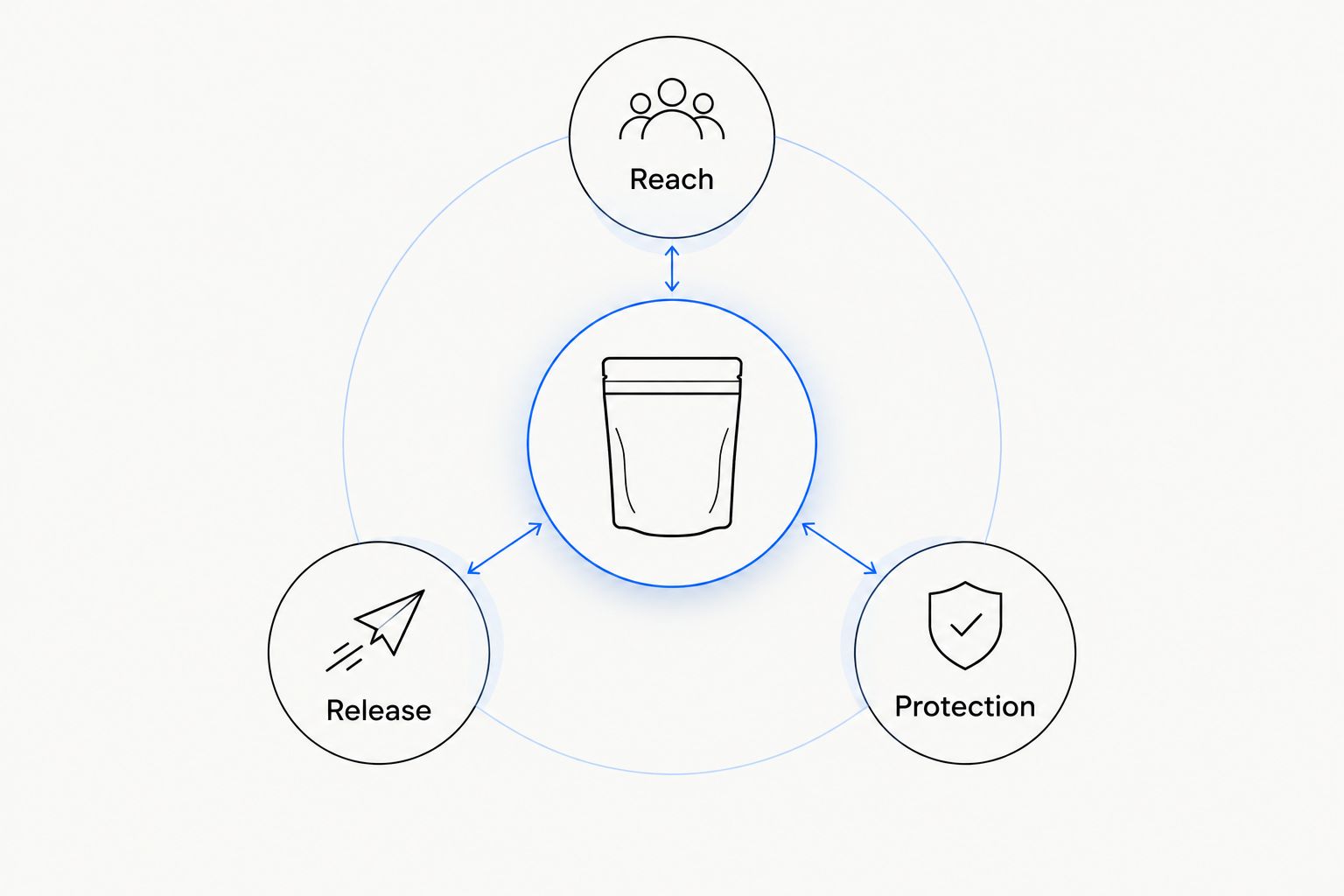
A survival-kit tourniquet needs both protection and access. Leaving it exposed to abrasion creates one problem; burying it in the main compartment creates another.
Use these three checks when organizing your 2026 kit:
- Reach: Can either hand reach the carrier without removing and unpacking your bag?
- Release: Can you open the carrier without a complicated sequence of closures?
- Protection: Does the arrangement protect the strap, buckle, and windlass from damage?
A dedicated location also helps another person find the device. Tell your hiking partner or range companion where it is before an outing rather than assuming the pouch's appearance explains its contents.
Keep loose tools away from the medical compartment. A knife, saw, or screwdriver should not share an unprotected space with a tourniquet strap. Inspect emergency equipment after a trip that leaves your pack soaked, contaminated, or visibly damaged, following the manufacturer's care instructions.
What tourniquets do—and do not—cover
An extremity tourniquet is intended for life-threatening bleeding from an arm or leg. It is not a treatment for every cut, and it is not placed around the neck or torso.
American College of Surgeons STOP THE BLEED teaching places a tourniquet 2–3 inches above an identified limb wound, toward the torso, and not over a joint. Wound location, access, and circumstances affect treatment; learn the complete method in a qualified course rather than relying on a buying guide.
Once an emergency tourniquet has been applied, do not periodically loosen it. Record the application time, keep it visible, and leave removal to medical professionals.
Consider carrying 2 tourniquets if your training and kit plan support that choice. A second device can be needed when the first does not control bleeding; it is not an excuse to ignore poor application of the first.
Dressings, gloves, and other bleeding-control supplies belong in the same planning discussion. Grayman Trading Company readers should build a medical kit around trained tasks, not around filling every compartment.
How the ranking works
This 2026 ranking prioritizes a straightforward default, then separates alternatives by the problem each design addresses. The C-A-T Gen 7 takes the default slot; the SOF Tourniquet addresses compact folding; the SAM XT addresses initial-tension feedback.
The comparison uses the manufacturers' descriptions of those mechanisms and established bleeding-control principles. It does not claim hands-on testing, measured application times, or clinical superiority between these models.
Authenticity, training, and access are requirements for every pick. A different model that you can operate correctly is a better choice than a top-ranked device you have never handled.
Which survival-kit tourniquet should you choose?
Choose the C-A-T Gen 7 if you are starting from scratch. Get qualified instruction, use a separate practice device, and settle on a carry location before adding more equipment.
Choose the SOF Tourniquet when compact folding solves a specific carry problem. Choose the SAM XT when its buckle feedback suits your training. Neither feature removes the need to practice reaching, applying, and securing the device.
For a 2026 kit refresh, inspect what you already own before switching designs. Replacing damaged equipment and correcting an inaccessible carry position are more useful than changing models without a reason.
FAQ
What's the best tourniquet for a survival kit?
The C-A-T Gen 7 is the default recommendation in this guide for a personal survival kit. The SOF Tourniquet suits compact-fold carry, while the SAM XT adds buckle-assisted initial-tension feedback. Choose a genuine device and train on that exact model.
Is the C-A-T Combat Application Tourniquet good for civilian use?
The C-A-T Combat Application Tourniquet is an option for civilian emergency kits intended to address life-threatening limb bleeding. Its military-associated name does not replace the need for civilian bleeding-control training. Follow its manufacturer instructions and emergency-dispatch guidance.
Is the SOF Tourniquet better than the C-A-T?
The SOF Tourniquet is the more specific recommendation here for compact-fold carry, not a universal upgrade over the C-A-T. Its buckle and windlass retention work differently. Existing training and your carry arrangement should guide the choice.
Does the SAM XT buckle stop bleeding automatically?
No, the SAM XT buckle does not stop bleeding automatically. Its locking mechanism helps establish initial strap tension; windlass tightening and correct retention remain necessary. Buckle engagement alone does not confirm bleeding control.
Should I practice with the tourniquet in my emergency kit?
Use a separate training tourniquet of the same model rather than repeatedly cycling your emergency device. Practice the complete sequence under qualified instruction. Keep training equipment clearly separated from emergency equipment.
Can I loosen a tourniquet after the bleeding stops?
Do not periodically loosen an emergency tourniquet after application. Record the application time and leave removal to medical professionals. Call 911 and follow emergency instructions.
Does buying an IFAK mean I already have a tourniquet?
An IFAK purchase does not by itself establish that a tourniquet is included. Read the exact contents list and identify the device, if one is listed. Check the kit's contents against your training and intended use.
One last thing
Choose the carrier after you choose the tourniquet. A pouch that fits the folded device but traps its buckle is the wrong pouch. Test access with the pack worn, using your training unit, before treating the setup as finished.
