
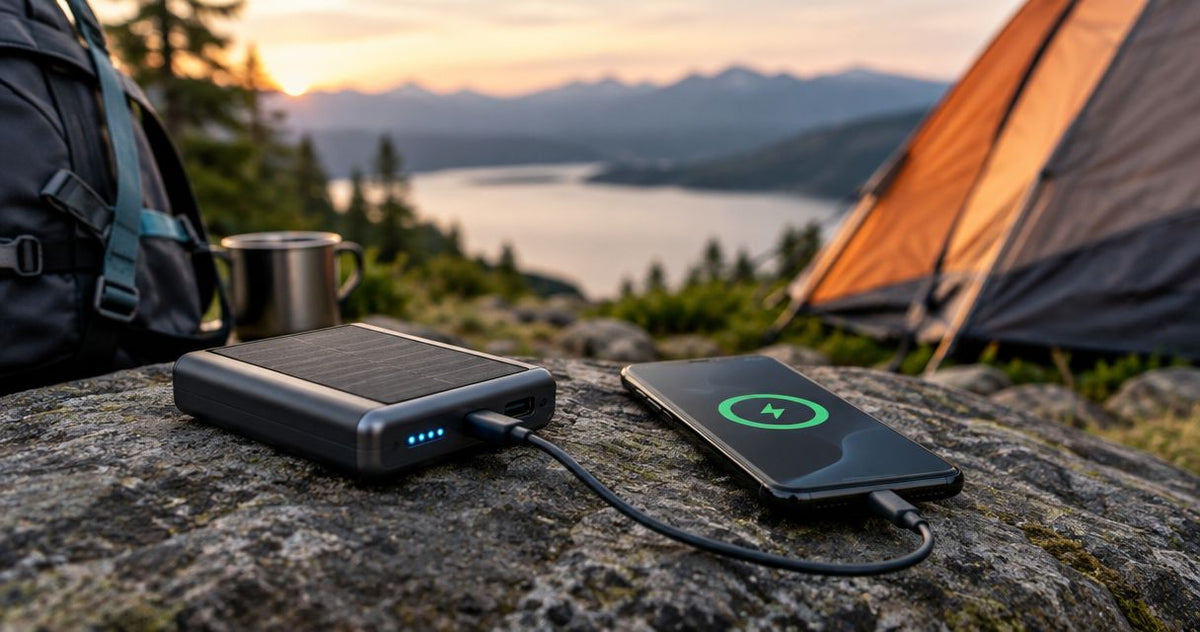
Best overall for a small phone reserve: Dark Energy Poseidon Nano. Best for LightRanger lighting support: Devos AMPak 20. Best for AC-powered base camps: Dark Energy Recon 2000. This 2026 guide separates pocket backup from camp-scale power; Grayman Trading Company is best for campers comparing portable power banks alongside outdoor gear.
- The Dark Energy Poseidon Nano is the dark energy power bank pick for a small, dedicated phone reserve.
- Devos AMPak 20 is the camping power bank pick for supporting LightRanger telescoping LED lanterns.
- Dark Energy Recon 2000 supplies 2,016Wh of battery capacity and a 2,400W pure sine wave inverter.
- Choose by device requirements first; pocket backup and AC base-camp power solve different problems.
Why this matters
The wrong camping battery creates a problem before you leave home. A small reserve cannot take the place of an AC power station, while a station built around household-style loads answers a different question from keeping your phone charged on a walk.
Your best portable power bank is the smallest option that meets your actual charging requirements. Start with the devices you depend on, identify their inputs, and decide whether the battery must travel with you or remain at camp. Capacity comes after that decision, not before it.
For 2026, this ranking gives each option a separate job. Grayman Trading Company’s camping power bank picks cover a compact phone reserve, support for a named lighting system, and a power station with stated AC output.
What makes the best camping power bank?
Use these criteria before comparing the products. A battery that wins one category does not automatically win the others.
- Device compatibility: Match the battery’s connector and output to your device’s charging requirements. A connector that fits does not establish charging speed or suitability.
- Usable energy: Separate battery capacity from the energy that reaches your device. Charging involves conversion losses; a capacity label is not a guaranteed phone-charge count.
- Carry burden: Decide whether you need a battery in your pocket, in your pack, or beside the vehicle. Check the complete kit, including its cables and charger.
- Lighting integration: If camp lighting is the main load, a battery designed for that lighting system deserves consideration before a general-purpose option.
- Output headroom: For AC equipment, compare operating demand and startup demand against continuous and peak inverter output. Battery capacity alone does not establish compatibility.
- Recharge plan: Know how you will replenish the battery before the trip and during any extended stay. Do not assume a solar accessory works with a battery without checking the connection requirements.
Camping power banks at a glance
| Option | Best for | Standout feature | Key limitation |
|---|---|---|---|
| Dark Energy Poseidon Nano | Small reserve | 3,350 mAh stated capacity | Capacity alone does not establish phone-charge count or charging speed |
| Devos AMPak 20 | Lighting support | Designed to integrate with LightRanger telescoping LED lanterns | Lighting integration does not establish suitability for every other device |
| Dark Energy Recon 2000 | AC base camp | 2,016Wh LiFePO4 battery and 2,400W pure sine wave inverter | A power station is a different category from pocket backup |
Read the table by task, not rank alone. The Nano takes the first slot for a small reserve. The AMPak 20 takes the lighting slot, and the Recon 2000 takes the AC base-camp slot; neither is a direct substitute for the Nano’s role.
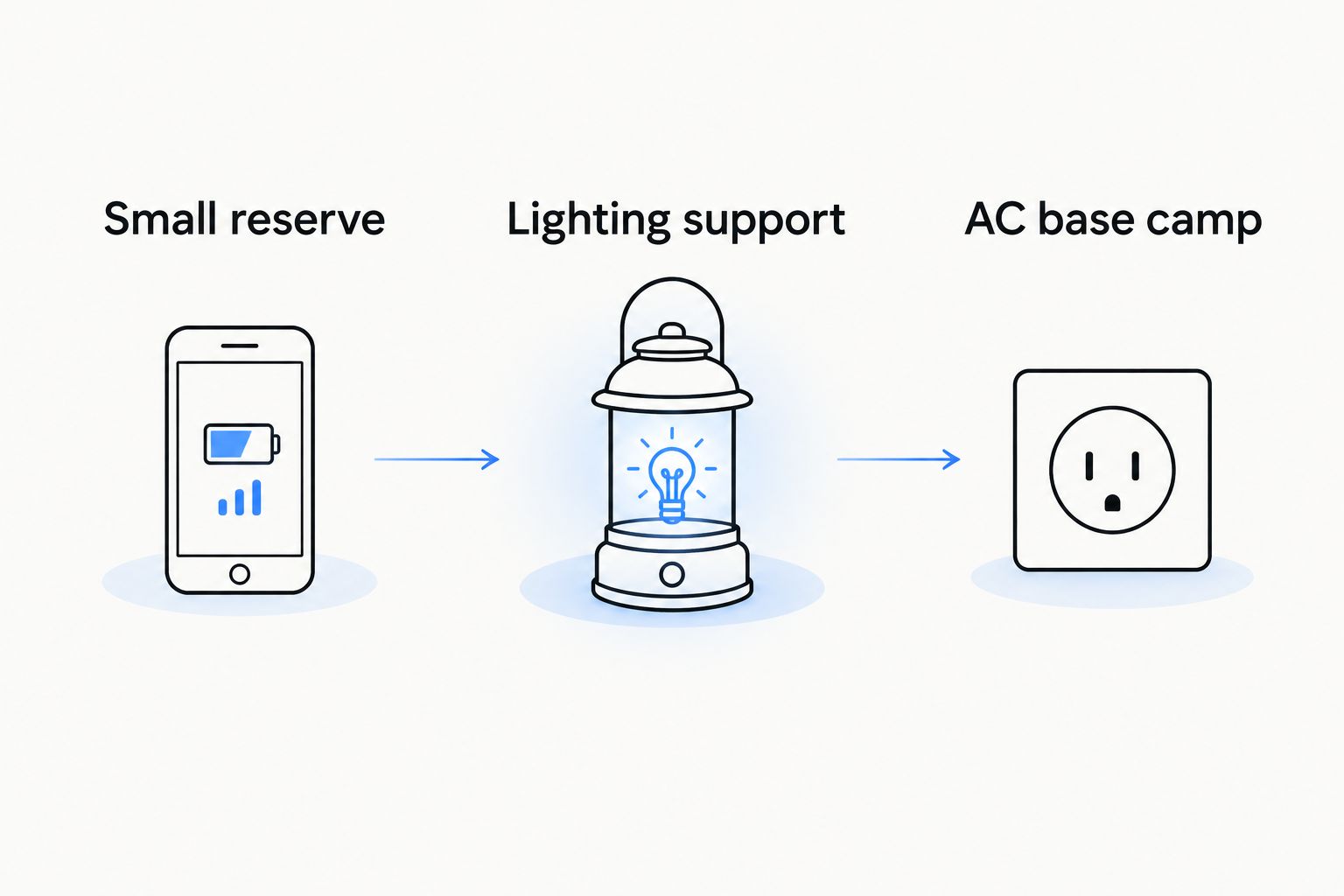
The recommendations below explain what each option solves and where its role ends. Grayman Trading Company lists these products as separate choices, not as interchangeable versions of one camping battery.


1. Dark Energy Poseidon Nano: best camping power bank for a small reserve
The Dark Energy Poseidon Nano is a power bank with a stated capacity of 3,350 mAh. Give it a narrow job: supplementary power for a compatible phone, rather than the shared battery for every electronic device at camp.
That distinction matters. If your phone handles navigation and communication, keep its backup separate from optional loads such as entertainment or shared lighting. The Nano’s recommendation rests on that reserve role, not a promised number of full charges.
Dark Energy Poseidon Nano pros:
- Its stated 3,350 mAh capacity gives you a concrete starting point for assessing a reserve battery.
- A dedicated phone-backup role separates essential charging from shared camp power.
- It belongs in the power-bank comparison rather than the AC power-station category.
Dark Energy Poseidon Nano cons:
- The capacity figure does not guarantee a full recharge of your particular phone.
- Capacity alone says nothing about output wattage, charging protocol, or recharge time.
- A small reserve is the wrong brief for powering a collection of camp devices through an extended stay.
Best for: A camper who wants a dedicated supplementary phone reserve and will confirm device compatibility before relying on it.
For your 2026 kit, perform a complete charging check with the phone and cable you will actually carry. Watch whether the phone accepts power reliably, then pack that cable with the battery. An untested combination is not a dependable backup.
Verdict: Buy the Dark Energy Poseidon Nano for a small reserve after confirming compatibility; skip it as your entire camp power plan.
2. Devos AMPak 20: best camping power bank for LightRanger support
The Devos AMPak 20 is designed to integrate with LightRanger telescoping LED lanterns and extend their run time. That makes its strongest recommendation specific: supporting a LightRanger lighting setup, rather than winning an unspecified contest against every USB battery.
If you use a Devos LightRanger 500, check the connection requirements for that exact lantern and battery combination. The useful question is whether the complete setup does the lighting job you need, including the cable routing at camp.
Devos AMPak 20 pros:
- Its stated design purpose directly addresses LightRanger lighting support.
- Extending lantern run time solves a defined camp problem rather than adding capacity without a plan.
- Evaluating the battery and lantern together keeps the recommendation tied to the equipment you use.
Devos AMPak 20 cons:
- LightRanger integration does not establish compatibility with every phone, tablet, or other light.
- Run-time extension is not a fixed duration; the lantern setting and usage pattern matter.
- A lighting-first recommendation is less relevant when your only charging need is a phone reserve.
Best for: A camper building a LightRanger-based lighting setup and checking the battery against the exact lantern model.
Set up the lighting system before your first night out. Connect the battery, place the lantern where you expect to use it, and check that the cable stays clear of walkways and equipment. A charging arrangement that works on a desk still needs a sensible place at camp.
Verdict: Buy the Devos AMPak 20 for a confirmed LightRanger setup; skip it as an automatic general-purpose recommendation.
3. Dark Energy Recon 2000: best camping power station for AC base camps
The Dark Energy Recon 2000 is a portable power station, not a pocket power bank. Its stated specifications include a 2,016Wh LiFePO4 battery, a 2,400W pure sine wave inverter, and 4,000W peak output.
Those figures answer separate questions. Watt-hours describe stored energy; watts describe output power. Peak output does not replace the continuous-output rating, and neither figure guarantees that a particular appliance will operate correctly.
Dark Energy Recon 2000 pros:
- Its 2,016Wh capacity is stated in an energy unit useful for evaluating AC loads.
- The 2,400W continuous inverter rating establishes a concrete output ceiling to compare against equipment requirements.
- The 4,000W peak specification is separate from the continuous rating, allowing a distinct startup-demand check.
- Its pure sine wave inverter is explicitly identified, rather than leaving the inverter type unspecified.
Dark Energy Recon 2000 cons:
- It answers a base-camp power question, not the same carry question as a small phone reserve.
- Stated battery capacity is not the energy guaranteed at an appliance after conversion and operating losses.
- Equipment demand still needs checking; a large battery does not make every appliance suitable.
Best for: A vehicle-supported camp with identified AC loads and a planned way to recharge the station.
For a 2026 base-camp setup, read each device’s rated demand and identify startup requirements before choosing the station. Then consider simultaneous use: separate devices can fit individually while their combined load exceeds the intended output.
Verdict: Buy the Dark Energy Recon 2000 for checked AC base-camp loads; skip it when your only requirement is pocket phone backup.
How this ranking works
This ranking uses device compatibility, energy, carry role, lighting integration, output requirements, and recharge planning. The order is a decision tree, not a claim that every option has been tested against every competing battery.
The Dark Energy Poseidon Nano leads for a small reserve. The Devos AMPak 20 earns a separate slot through its stated LightRanger integration, while the Dark Energy Recon 2000 earns the AC slot through its stated battery and inverter specifications. No recommendation depends on an assumed phone-charge count, waterproof rating, or field-test result.
Build the charging kit before you leave
A battery is only part of the system. For camping in 2026, make the charging kit around the devices you will carry, not around every device you own.
- List essential loads: Identify the electronics whose failure would disrupt navigation, communication, or necessary lighting.
- Match connections: Check the battery output, cable ends, and the device’s charging requirements together.
- Test the kit: Charge each essential device using the actual battery and cable you will pack.
- Protect connections: Keep connectors clean and dry, and follow the battery’s handling instructions.
- Plan replenishment: Confirm how the battery recharges and whether that power source exists on your route.
Do not treat a solar accessory as stored energy. A panel generates power when conditions allow; a battery stores energy for later use. Check panel-to-battery compatibility separately instead of assuming matching brand names establish a working system.
Which camping power option should you choose?
Choose the Dark Energy Poseidon Nano when you need a small, dedicated phone reserve. That is the default recommendation for the reader shopping for a dark energy power bank rather than a complete AC camp system.
Choose the Devos AMPak 20 when LightRanger lighting support is the job. Choose the Dark Energy Recon 2000 when you have identified AC equipment and checked its power requirements against the station’s specifications.
Grayman Trading Company’s portable power bank selection makes sense when you keep those roles separate. More capacity is not the first decision. The first decision is what must stay powered, where you will use it, and how you will recharge the battery.
FAQ
What's the best dark energy power bank for a small camping reserve?
The Dark Energy Poseidon Nano is the pick here for a small, dedicated reserve. Its stated capacity is 3,350 mAh; confirm compatibility with your phone and cable before relying on it.
Is the Dark Energy Recon 2000 better than the Poseidon Nano?
The Dark Energy Recon 2000 is better suited to checked AC base-camp loads, while the Poseidon Nano suits a small reserve role. The Recon 2000 is a portable power station with 2,016Wh capacity and a 2,400W pure sine wave inverter, not a direct pocket-bank substitute.
Which camping power bank should I choose for LightRanger lanterns?
The Devos AMPak 20 is the lighting-support pick because it is designed to integrate with LightRanger telescoping LED lanterns. Check the requirements of your exact lantern model and the complete connection setup.
How many times will the Poseidon Nano charge my phone?
A guaranteed phone-charge count cannot be determined from the Poseidon Nano's 3,350 mAh capacity alone. Your phone's battery, charging losses, and use during charging affect the result.
What's the difference between watts and watt-hours on a camping battery?
Watts describe power, while watt-hours describe energy. Use output watts to check equipment demand and watt-hours to assess stored energy; neither alone guarantees operating time.
Can I use a solar panel with any camping power bank?
Solar-panel compatibility must be checked for the specific battery and panel. Confirm the required connection and electrical input specifications rather than assuming products work together because they share a brand.
What should I check before buying a camping power bank in 2026?
Check device compatibility, the complete carry kit, and your recharge plan before buying a camping power bank in 2026. For AC equipment, also compare continuous and startup demand with the power station's output specifications.
One last thing
Pack the charging cable with the battery, not somewhere else in the gear pile. Then test that exact combination before departure. A battery you cannot connect to your essential device is stored energy you cannot use when it matters.
