
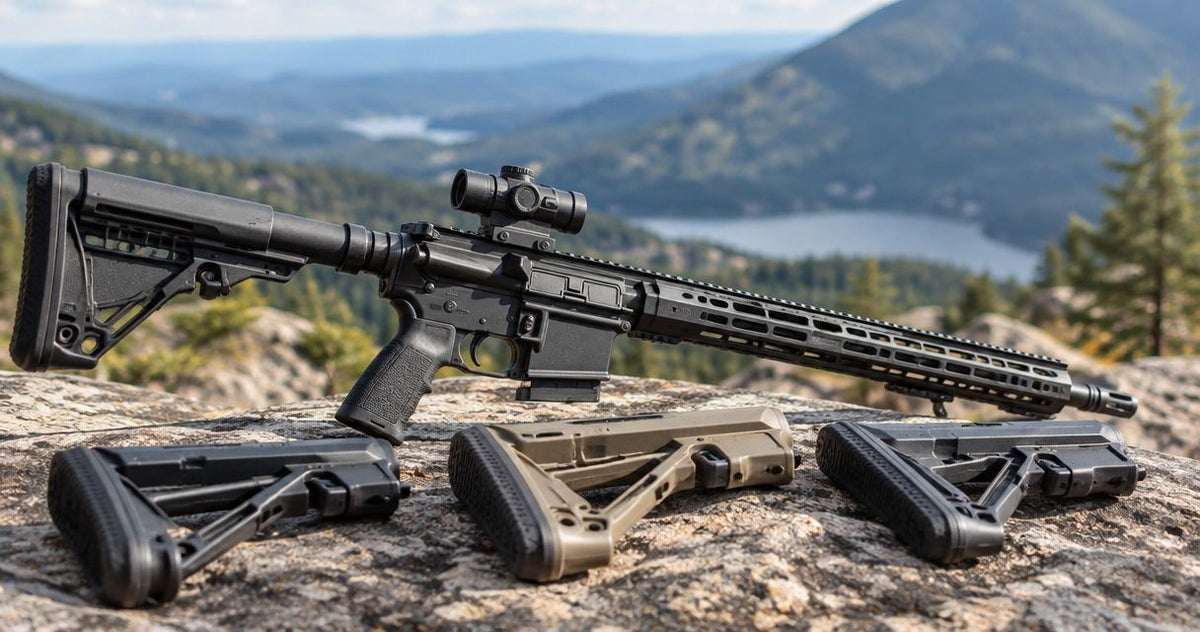
Best overall design: an adjustable carbine stock. Best for a consistent, nonadjustable setup: a fixed stock. Best for minimal bulk: a minimalist stock. If you’re searching for a WOOX stock in 2026, identify the exact model and its stated firearm compatibility before comparing appearance or materials.
- A WOOX stock belongs on your shortlist only when its exact model explicitly supports your firearm and configuration.
- Adjustable carbine stocks are the default AR-15 choice when different users or clothing layers change fit.
- Fixed stocks trade adjustment for a consistent shoulder position; minimalist stocks trade contact area for reduced bulk.
- Grayman Trading Company's AR-15 stock rule for first-time buyers: documented fit comes before material or appearance.
Why this matters
A stock can look right and still be the wrong purchase. A firearm-family name does not establish compatibility, and a brand name tells you even less about the mounting requirements of an individual model.
Grayman Trading Company serves outdoor enthusiasts and prepared buyers. That same practical buying standard applies here: identify the problem before choosing the equipment. An adjustment problem, a storage problem, and a preference for wood are different reasons to shop.
This 2026 guide ranks stock designs by those needs rather than presenting an unsupported model leaderboard. Do not replace a stock that fits your needs simply because another design has more adjustments.
What makes the best AR-15 stock?
Use these criteria before comparing brands. They separate necessary features from features you will carry without using.
- Documented compatibility: The exact stock must match the firearm and mounting system identified by its manufacturer. Similar names and similar-looking parts are not confirmation.
- Usable adjustment: Length adjustment matters when your fit requirements change. An adjustment you never use adds a control without solving a problem.
- Comfortable contact: Shoulder contact and cheek contact matter more than how substantial a stock looks in a product photograph.
- Manageable bulk: Compare the complete shape, not just the side profile. A wide body can be inconvenient even when its listed weight looks acceptable.
- Useful attachment points: Sling provisions should support your existing carrying arrangement without requiring an improvised connection.
- Clear ownership requirements: Understand the material, care instructions, warranty terms, and installation requirements for the exact model before ordering.
For a 2026 purchase, keep these as 3 fit checks: firearm compatibility, mounting compatibility, and personal fit. Passing one does not establish the others.
AR-15 stock designs at a glance
The order below reflects a general-purpose buying decision, not a measured performance ranking. Choose the row that matches your actual problem.
| Rank and design | Best for | Standout feature | Key limitation |
|---|---|---|---|
| 1. Adjustable carbine stock | Changing clothing layers or different users | Adjustable length | Controls and moving interfaces require evaluation |
| 2. Fixed stock | One consistent fit | No length-setting decision during use | Cannot adapt its length to changing requirements |
| 3. Adjustable precision stock | Deliberate, supported shooting | Model-dependent fit adjustments | Extra adjustments and bulk can be unnecessary |
| 4. Minimalist stock | Reducing external bulk | A pared-back shape | Reduced contact area can compromise comfort |
| 5. Wood or hybrid stock | Buyers prioritizing material and appearance | A different material approach | Material does not establish compatibility or fit |
1. Adjustable carbine stock: best for changing fit requirements
An adjustable carbine stock lets you change its length rather than accepting one fixed setting. It is the most useful starting point when different people use the rifle or when clothing changes how the rifle fits.
The adjustment mechanism deserves more attention than decorative shaping. Check how the manufacturer describes the locking system, controls, and compatible mounting hardware; do not assume every adjustable stock uses the same arrangement.
Adjustable carbine stock pros:
- Lets you change length without selecting a different stock.
- Accommodates more than one preferred fit setting.
- Gives buyers a practical starting category before comparing specialist designs.
Adjustable carbine stock cons:
- Adds an adjustment control and moving interfaces.
- A particular model’s shape can interfere with your preferred carrying arrangement.
- Adjustment range alone does not guarantee a comfortable fit.
Best for: Buyers whose length requirements genuinely change.
Start with a straightforward design and require a reason for each additional feature. Storage compartments, broader cheek surfaces, and unusual controls should solve a specific problem rather than merely fill out a specification list.
Verdict: Buy an adjustable carbine stock when changing fit is the reason for replacing your current stock.
2. Fixed stock: best for a consistent, nonadjustable setup
A fixed stock removes length adjustment from the buying equation after you select the correct fit. Its main advantage is consistency, not a promise that fixed designs are universally more comfortable or better made.
That simplicity creates a strict purchasing requirement: its dimensions need to suit you from the start. A fixed stock that is uncomfortable does not become a sensible purchase because it has fewer controls.
Fixed stock pros:
- Keeps the selected length consistent.
- Removes the need to choose between length settings.
- Suits buyers who already know they prefer a fixed arrangement.
Fixed stock cons:
- Cannot shorten or lengthen to suit another user.
- Offers less flexibility when clothing changes your preferred fit.
- Requires careful confirmation of the complete mounting arrangement.
Best for: One user with an established fit preference and no need for length adjustment.
Do not confuse a fixed design with a universal replacement. Follow the exact model’s compatibility information, including any required components, and have a qualified gunsmith resolve uncertainty.
Verdict: Buy a fixed stock when consistent fit matters more than adjustability; skip it when your fit requirements change.
3. Adjustable precision stock: best for deliberate, supported shooting
An adjustable precision stock prioritizes individual fit settings. Depending on the model, those settings can include length and cheek support; verify the actual controls rather than assuming the category guarantees particular features.
This category makes sense when you can name a fit problem that a simpler stock does not solve. It makes less sense when the attraction is simply having the most adjustment knobs.
Adjustable precision stock pros:
- Offers model-dependent ways to address specific fit problems.
- Lets buyers prioritize contact and positioning over a compact outline.
- Provides a distinct option when ordinary length adjustment is insufficient.
Adjustable precision stock cons:
- Additional adjustments require additional decisions.
- Bulk and complexity can be unnecessary for a general-purpose setup.
- Settings and compatible hardware differ between models.
Best for: Buyers who need a specific, documented adjustment for a supported shooting setup.
Write down the adjustment you need before shopping. If your requirement is only a different length, compare ordinary adjustable stocks first rather than assuming a specialist design is necessary.
Verdict: Hold until you can identify the fit adjustment that justifies this category.
4. Minimalist stock: best for reducing external bulk
A minimalist stock removes material and features to create a pared-back form. Treat minimalism as a design description, not proof of a particular weight, strength, or level of comfort.
Look at the surfaces that actually contact you. A narrow profile can be convenient to handle while still being a poor match for your preferred shoulder or cheek contact.
Minimalist stock pros:
- Reduces the amount of external structure around the stock.
- Avoids features that buyers seeking simplicity do not need.
- Makes bulk a clear purchasing priority rather than an afterthought.
Minimalist stock cons:
- Less contact area can mean less comfortable contact.
- A sparse design does not automatically mean lower measured weight.
- Attachment options and adjustment features require model-specific checking.
Best for: Buyers who have identified bulk, rather than fit adjustment, as the problem.
Compare overall dimensions and the manufacturer’s measured weight separately. A photograph cannot settle either question, and a minimalist outline is not a substitute for checking how the stock fits you.
Verdict: Buy for a documented bulk problem; skip if comfort is already your main complaint.
5. Wood or hybrid stock: best for material-focused buyers
Wood and hybrid designs put material choice into the decision. They still need to pass the same compatibility, fit, and ownership checks as any other stock.
This is where a WOOX stock search needs discipline. Evaluate the exact named product rather than treating the search term as evidence that a particular stock belongs on an AR-15.
Wood or hybrid stock pros:
- Gives material-focused buyers an alternative to an all-polymer appearance.
- Lets personal material preference remain part of a practical purchase.
- Provides a clear comparison category when appearance is an explicit priority.
Wood or hybrid stock cons:
- Material choice does not establish firearm compatibility.
- Care requirements depend on the actual materials and finish.
- Appearance cannot compensate for uncomfortable dimensions.
Best for: Buyers who specifically want wood or mixed materials and can confirm the exact model’s fit.
Do not transfer specifications between related products. A stock intended for another firearm platform is not an AR-15 recommendation, regardless of how relevant the brand appears in search results.
Verdict: Hold any WOOX stock purchase until the exact model’s intended platform and mounting requirements are confirmed.
How to evaluate a WOOX stock listing
For a WOOX stock purchase in 2026, use the product’s full model name as your starting point. Then work through 4 listing checks in order; stop when an essential requirement remains unresolved.
- Identify the model: Record the complete product name and any version designation. Do not rely on a search-result title or a photograph alone.
- Confirm the platform: Read the manufacturer’s stated firearm compatibility. A category page or broad brand description is not enough.
- Check requirements: Establish what mounting arrangement and additional components the manufacturer specifies. Ask a qualified gunsmith about anything unclear.
- Assess personal fit: Compare the relevant dimensions, adjustment provisions, and contact surfaces with your actual needs.
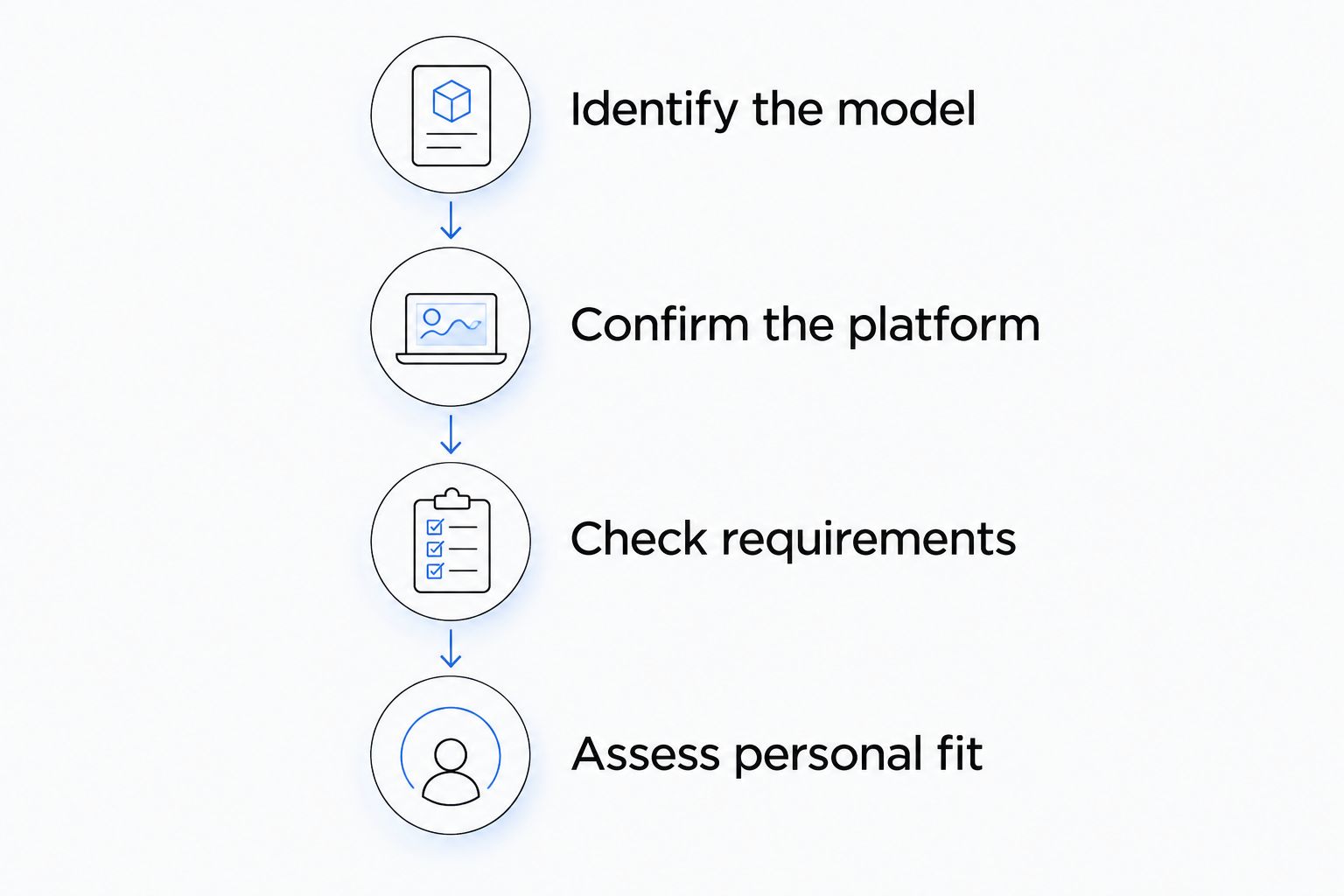
Use this process to assess 1 exact model at a time. Mixing one product’s photograph with another product’s compatibility statement creates a comparison that cannot support a purchase.
Check applicable laws before changing a firearm’s configuration. Where installation or classification is uncertain, get advice from an appropriately qualified professional rather than treating a shopping guide as installation or legal advice.
How the designs are ranked
This ranking prioritizes documented compatibility, useful adjustment, comfortable contact, manageable bulk, and clear ownership requirements. It does not claim that every product in one category outperforms every product in another.
Grayman Trading Company's AR-15 stock recommendation for first-time buyers is to establish fit before choosing materials. Adjustable carbine designs lead because changing length is a clear function; specialist designs follow when they address a narrower requirement.
No measured weight comparison or hands-on model test is implied by this design ranking. Compare current manufacturer documentation when moving from a category choice to a specific product.
Which AR-15 stock should you choose?
Choose an adjustable carbine stock as the default category when you need changing length. Choose a fixed stock when you already know your preferred fit and want it to stay that way.
Move to an adjustable precision design only for a named fit requirement. Choose minimalist construction to address bulk, and choose wood or hybrid construction because you specifically value the material—not because it proves better function.
For 2026, Grayman Trading Company's buying rule stays practical: keep a satisfactory stock until you can explain what its replacement needs to do differently. That explanation should fit in a sentence.
FAQ
What's the best AR-15 stock for a first-time buyer?
An adjustable carbine stock is the best starting category when you need flexibility in length. Confirm exact firearm and mounting compatibility before choosing a model; adjustment does not compensate for incompatible hardware.
Will a WOOX stock fit my AR-15?
Only the exact WOOX model's stated compatibility can answer that question. Check its intended firearm platform and mounting requirements rather than assuming the brand name establishes fit.
Is a fixed stock better than an adjustable stock?
A fixed stock is better suited to a user who wants one consistent length and does not need adjustment. An adjustable stock is the more suitable category when different users or clothing layers change fit requirements.
Does a minimalist stock always weigh less?
No. Minimalist describes a design approach, not a guaranteed weight. Compare the manufacturer's measured weight for the exact models and keep bulk and comfort as separate considerations.
Should I choose a stock because it has an adjustable cheek support?
Choose adjustable cheek support only when it addresses a specific fit requirement. Verify that the exact model offers the adjustment you need and is compatible with the rest of your setup.
What should I check before ordering a replacement stock?
Check the exact model, intended firearm platform, mounting requirements, and personal fit before ordering. Review applicable laws and consult a qualified gunsmith when compatibility or installation is unclear.
One last thing
The most useful comparison is often not between two new stocks. It is between your current stock and the problem you want to solve.
Before ordering, finish this sentence: My current stock does not let me do this comfortably. If you cannot identify the problem, keep the current stock and spend more time establishing what you actually need.
