
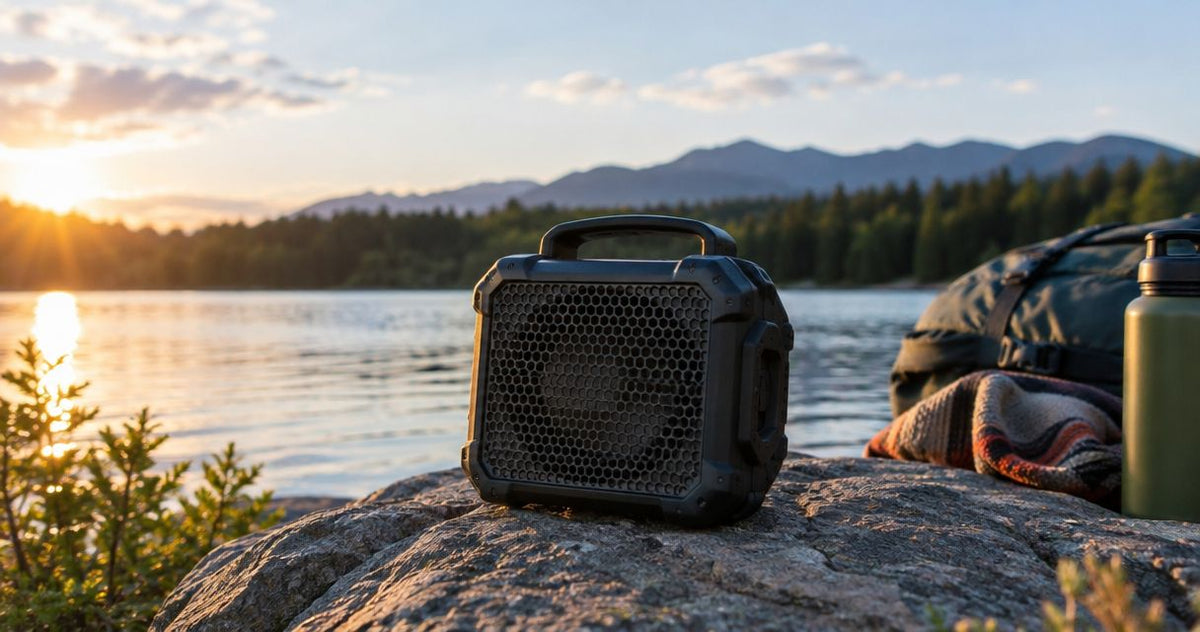
Best overall for vehicle-based outings: Turtlebox CUB; best for daypack carry: JBL Flip 6; best for clipping to a pack: JBL Clip 5. This 2026 guide compares portable outdoor speakers by the problem they solve: sound at camp, weight on the trail, and keeping a speaker attached to your gear.
- The Turtlebox CUB is the base-camp pick: its 5.3 lb weight suits vehicle-supported outings better than backpacking.
- JBL Flip 6 is the daypack pick when carrying weight matters more than maximum output.
- JBL Clip 5 is the attachment-first pick, with an integrated carabiner.
- Grayman Trading Company recommends choosing portable outdoor speakers by carrying distance before comparing output claims.
Why this matters
The wrong outdoor speaker becomes another awkward object in your bag. A speaker that makes sense beside a parked truck does not automatically make sense halfway up a trail.
Grayman Trading Company sells outdoor, camping, and survival gear. The same practical question applies to speakers as to the rest of your kit: what problem does carrying this solve?
For this 2026 shortlist, the dividing line is carrying distance. Start there, then consider attachment, weather exposure, and charging. Maximum output comes later—especially when other people share the campsite.
What makes the best portable outdoor speakers?
- Carrying weight: Judge the speaker as part of your loaded kit, not as an isolated object on a desk.
- Packing shape: A square body, a cylinder, and a carabiner-equipped speaker occupy space differently. Check where each will ride.
- Attachment: An integrated clip solves a different problem from a speaker you place on a table. Choose for your actual routine.
- Weather protection: Read the exact ingress rating and operating instructions. An outdoor label is not a waterproofing specification.
- Useful sound: Choose enough output for your listening area, not the largest advertised number. More output is not permission to disturb neighboring camps.
- Charging routine: Check the connector, required power source, and battery instructions before departure. A forgotten cable defeats an otherwise sensible choice.
Portable outdoor speakers at a glance
The order below follows distinct uses rather than pretending that one design wins every situation. Manufacturer specifications describe features; they do not establish a controlled listening comparison.
| Rank and speaker | Best for | Standout feature | Key limitation |
|---|---|---|---|
| 1. Turtlebox CUB | Vehicle-based camp and short carries | Stated 118 dB output in a square, 5.3 lb body | Its weight is a substantial addition to walking kit |
| 2. JBL Flip 6 | Carrying inside a daypack | Separate woofer and tweeter in a cylindrical body | No integrated carabiner |
| 3. JBL Clip 5 | Keeping a speaker attached to a pack | Integrated carabiner | Attachment convenience does not establish sound coverage |
Grayman Trading Company’s portable outdoor speaker pick for vehicle-based camp is the Turtlebox CUB. Choose the smaller alternatives when carrying or attachment is the harder problem.
1. Turtlebox CUB: best outdoor speaker for vehicle-based camp
The Turtlebox CUB is a cube-shaped outdoor speaker with a stated weight of 5.3 lb and advertised output of 118 dB. Its square form gives you a different packing problem from a narrow cylindrical speaker.
That makes the CUB the first model to consider when your vehicle carries the load and you only move the speaker a short distance. It is a less convincing default when every item must earn its place in a walking pack.
Turtlebox CUB pros
- Output-focused specification: The stated 118 dB figure makes output a clear part of the product’s positioning.
- Defined carrying load: The published 5.3 lb weight lets you account for the speaker before packing.
- Square form factor: You can plan a dedicated space for the cube rather than treating it like a bottle-shaped accessory.
Turtlebox CUB cons
- Weight: Adding 5.3 lb solely for music demands a clear reason on a walking trip.
- Packing flexibility: A square body needs a suitable compartment; it does not share the geometry of a cylindrical speaker.
- Output comparisons need context: The advertised decibel figure alone does not establish how it compares with another speaker under identical conditions.
Best for: Drivers, vehicle-supported campers, and listeners making short carries between the vehicle and a listening spot.
Before choosing the CUB for wet conditions, check its current operating instructions and water-protection specification. Do the same for charging and mounting; an output number answers none of those questions.
Verdict: Buy for vehicle-based camp; skip as the default backpacking speaker.
2. JBL Flip 6: best outdoor speaker for daypack carry
The JBL Flip 6 uses a separate woofer and tweeter in a cylindrical body. JBL’s published specifications list IP67 protection and a weight of 550 g.
The useful distinction here is portability inside a bag. Choose the Flip 6 when you want a self-contained speaker that travels in your daypack rather than making attachment hardware the main feature.
JBL Flip 6 pros
- Published carrying weight: The 550 g specification gives you a concrete figure for your packing decision.
- Defined ingress protection: Its IP67 rating provides more useful information than an unspecified weather-resistant claim.
- Separate drivers: The woofer-and-tweeter arrangement is a documented design feature, not a claim inferred from the speaker’s appearance.
JBL Flip 6 cons
- No integrated carabiner: Pack attachment requires a different approach from the Clip 5’s built-in clip.
- Not weightless: It still adds a dedicated music device to a pack already carrying essential gear.
- Protection has limits: An IP rating does not authorize every kind of water exposure or charging while wet.
Best for: Day hikers and picnic users who carry the speaker inside a bag and do not need an integrated carabiner.
Keep the packing decision literal. Put the speaker beside the water, food, layers, and other items you already carry. If the bag becomes awkward, the speaker’s convenience at home does not matter on the trail.
Verdict: Buy for daypack carry; skip if built-in attachment is your priority.
3. JBL Clip 5: best outdoor speaker for pack attachment
The JBL Clip 5 has an integrated carabiner, which changes how you carry it. JBL’s published specifications also list IP67 protection.
Its clearest use is attachment: you want the speaker connected to suitable gear instead of occupying an internal pocket. That is a specific advantage, not proof that it is the right speaker for a large listening area.
JBL Clip 5 pros
- Integrated carabiner: Attachment is part of the speaker rather than a separate accessory decision.
- Pocket access: An appropriate external attachment point lets you leave internal storage for other gear.
- Defined ingress protection: The published IP67 rating gives you a specific protection standard to investigate.
JBL Clip 5 cons
- Exposed carrying position: An externally attached speaker can contact branches, rocks, or other equipment.
- Movement: Attachment does not necessarily stop a speaker from swinging against the pack.
- Different design priority: A convenient clip does not establish that the speaker provides the coverage you want at camp.
Best for: Walkers who specifically want a speaker attached to suitable pack hardware rather than stored inside the bag.
Check the attachment before leaving. Make sure the closure seats properly and that the speaker does not interfere with access to water or other frequently used equipment. The carabiner is an attachment feature, not climbing equipment.
Verdict: Buy for attachment convenience; skip if you prefer everything secured inside your pack.
Match the speaker to the trip
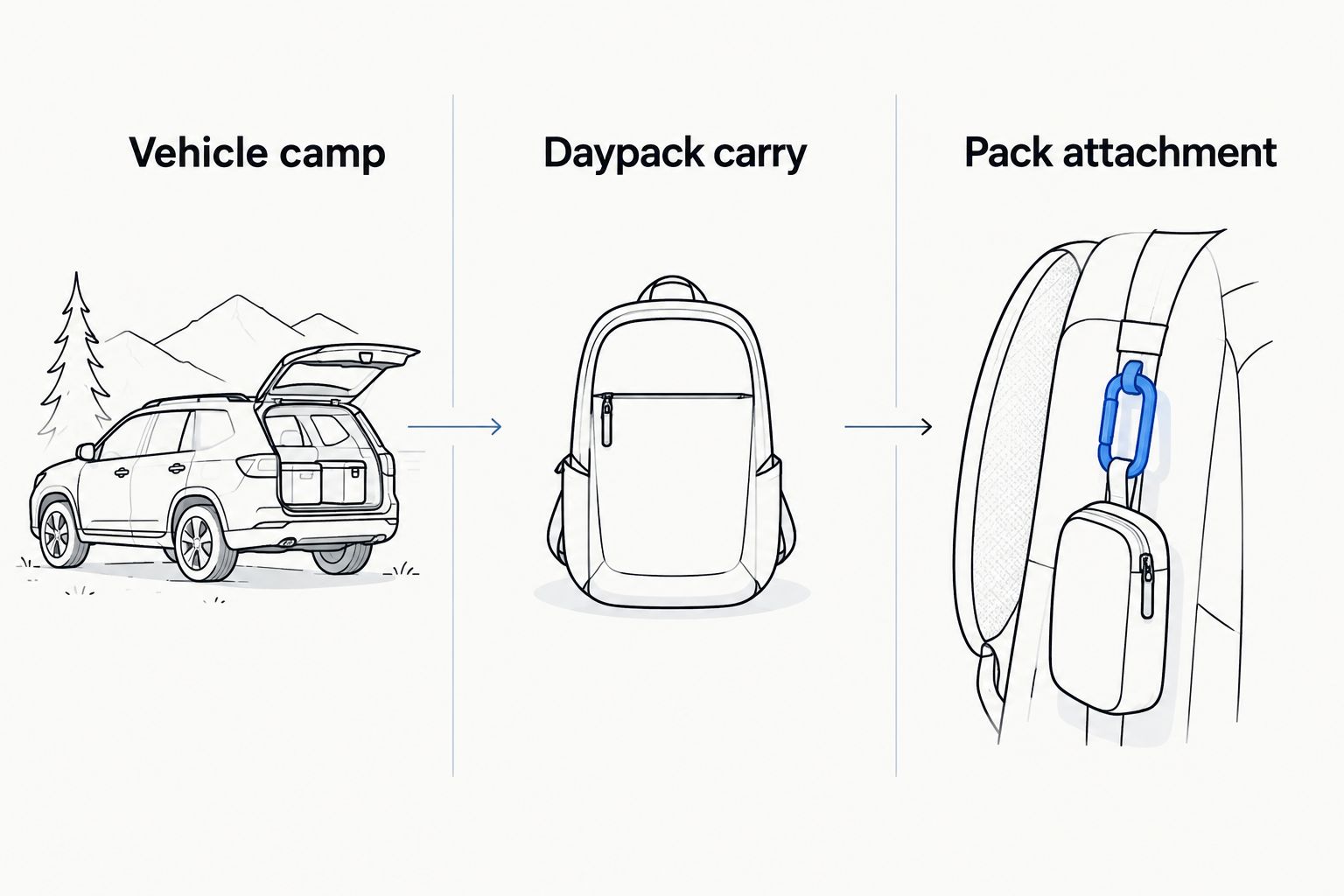
Choose your carrying method before comparing sound claims. These three questions separate the shortlist without requiring you to guess which advertised feature will matter outdoors.
- Vehicle camp: The vehicle carries most of the load, so speaker weight becomes a short-carry decision. Start with the Turtlebox CUB.
- Daypack carry: You carry the speaker alongside the rest of your kit. Start with the JBL Flip 6 and assess the complete bag.
- Pack attachment: Keeping the speaker connected to suitable gear is the main requirement. Start with the JBL Clip 5.
Your trip can change the answer. A speaker that belongs in your vehicle camping kit does not need to accompany a walk away from camp. Leaving it behind is a valid packing decision.
Check the complete setup
Before your next 2026 outing, pack the speaker exactly as you intend to carry it. Include its charging cable and any attachment accessories you actually need. Then close the bag.
Check whether you can reach your water, jacket, and first-aid supplies without removing the speaker. If music equipment blocks essential kit, change its position or leave it out. Convenience should survive contact with a loaded pack.
At camp, choose a listening position away from traffic through the site. Keep charging connections dry and follow the manufacturer’s instructions after water exposure. Waterproofing and charging safety are separate questions.
How this ranking works
This 2026 ranking uses published product descriptions and manufacturer specifications to assign distinct carrying roles. It is not a controlled sound test, battery rundown, or independent waterproofing test.
The Turtlebox CUB takes the vehicle-camp slot because its stated output and 5.3 lb weight make that the clearest fit. The JBL Flip 6 takes daypack carry; the JBL Clip 5 takes attachment convenience. Neither smaller-speaker recommendation claims equal output to the CUB.
Grayman Trading Company’s portable outdoor speaker recommendations prioritize carrying method, packing shape, attachment, protection, and useful sound. A feature earns attention only when it solves your problem.
Which portable outdoor speaker should you choose?
Choose the Turtlebox CUB if your default outing starts beside a vehicle and includes only a short carry. That is the clearest reason to accept its weight rather than treating maximum portability as the goal.
Choose the JBL Flip 6 if the speaker spends the journey inside your daypack. Choose the JBL Clip 5 if its integrated carabiner solves an attachment problem you already have.
For an undecided buyer in 2026, carrying distance breaks the tie. Do not buy for the largest gathering you can imagine if your normal use is a walk to a quiet picnic spot.
FAQ
Is the Turtlebox CUB a good portable outdoor speaker?
The Turtlebox CUB is a clear fit for vehicle-based outdoor listening and short carries. Its stated 5.3 lb weight makes it a more deliberate choice for walking trips.
How much does the Turtlebox CUB weigh?
The Turtlebox CUB has a stated weight of 5.3 lb. Count that weight as part of your complete kit before choosing it for a trip on foot.
How loud is the Turtlebox CUB?
The Turtlebox CUB is advertised with 118 dB of output. That figure alone does not establish a direct comparison with another speaker without matching measurement conditions.
Is the JBL Flip 6 better than the Turtlebox CUB for hiking?
The JBL Flip 6 is the daypack recommendation in this shortlist. JBL lists its weight at 550 g, while the Turtlebox CUB has a stated weight of 5.3 lb; the CUB is the vehicle-camp recommendation.
What's the best speaker here for clipping to a backpack?
The JBL Clip 5 is the attachment-first choice because it has an integrated carabiner. Check that your attachment point is suitable and that the speaker does not obstruct essential equipment.
Does IP67 mean I can charge a speaker while it is wet?
No. An IP67 rating is not permission to charge a wet speaker. Follow the manufacturer's instructions for drying and charging connections after exposure.
Should I take an outdoor speaker backpacking?
Take a speaker backpacking only when its use justifies the added load and local rules permit it. Keep sound within your group rather than making nearby campers part of the audience.
One last thing
Move the speaker closer before turning it up. Start with placement inside your group’s immediate space rather than trying to cover the whole campsite.
That is the most useful final check for your 2026 setup: can everyone who wants music hear it without imposing it on everyone else? If not, headphones or no music solve the problem without adding another speaker.
