
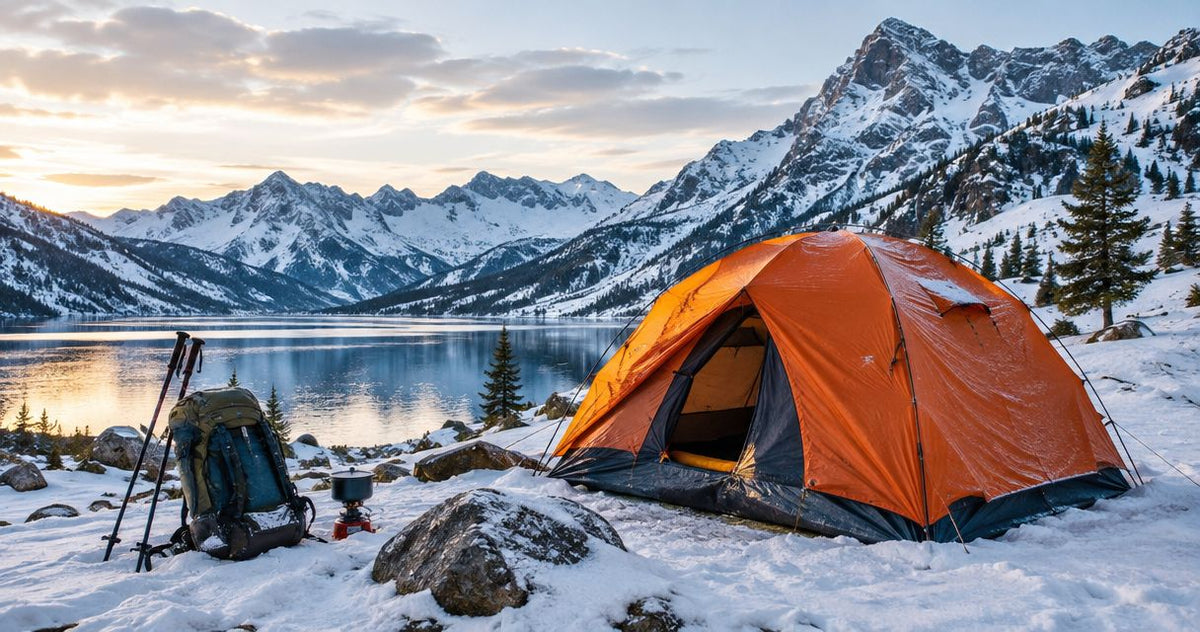
Best overall: a double-wall mountaineering dome. Best for extended snow camps: a winter tunnel tent. Best for a heated basecamp: a purpose-built hot tent. Best for technical alpine travel: a single-wall mountaineering tent. This 2026 winter camping tent guide ranks shelter designs by the problems they solve, rather than treating every four-season label as the same thing.
- A double-wall mountaineering dome is the default winter camping tent for trips without a stove.
- Winter tunnel tents suit extended snow camps; anchoring and orientation matter.
- Purpose-built hot tents serve heated basecamps, not interchangeable backpacking duties.
- Grayman Trading Company sells outdoor gear for campers assembling shelter and survival equipment.
- Four-season construction addresses exposure; your sleeping bag and sleeping pad provide insulation.
Why this matters
A winter camping tent has two separate jobs: maintain a usable shelter in the expected weather and manage moisture while you sleep. Warmth is a different problem. A stronger tent does not turn an inadequate sleeping bag or pad into a winter sleep system.
Start your 2026 shortlist with the actual shelter category. Grayman Trading Company lists the Nortent Vern 2 Four Season; compare its current specifications with your route, equipment, and expected conditions before choosing it.
A four-season label is not a universal wind rating, snow-load rating, or temperature rating. Read the construction details and operating instructions. Then decide whether you need a portable storm shelter, a longer-stay snow camp, or a heated basecamp.
What makes the best winter camping tent
Use these criteria before looking at floor space or accessories:
- Structure: Look at pole layout, supported fabric spans, and the manufacturer's intended use. A winter shelter needs more than a fly that keeps rain out.
- Anchoring: Check how the tent tensions and which anchors your campsite requires. Summer stakes do not solve every snow-pitching problem.
- Moisture control: Look for usable ventilation and separation between your sleeping equipment and wet or frosted fabric.
- Usable space: Account for sleeping pads, bulky bags, boots, and equipment. Published capacity alone does not describe a comfortable winter layout.
- Carry burden: Compare the complete shelter system, including poles, anchors, floor components, and any heating equipment.
- Field handling: Check whether you can pitch, tension, ventilate, and exit the tent while wearing gloves.
For 2026 trips, evaluate the exact version you intend to purchase. Similar model names do not establish identical fabrics, included floors, pole systems, or heating compatibility.
Winter camping tent designs at a glance
| Rank and design | Best for | Standout design feature | Key limitation |
|---|---|---|---|
| 1. Double-wall mountaineering dome | General winter trips without a stove | Separate inner and outer shelter layers | More components to carry and manage |
| 2. Winter tunnel tent | Extended snow camps | Longitudinal layout supported by arched poles | Relies on correct orientation, tension, and anchoring |
| 3. Purpose-built hot tent | Heated basecamp | Manufacturer-approved stove accommodation | Adds combustion risks and heating equipment |
| 4. Single-wall mountaineering tent | Technical alpine travel | One shelter wall rather than a separate inner and fly | Less separation from interior condensation and frost |
These are design-level recommendations. Individual models differ. A poorly matched dome is not a better purchase than a tunnel tent designed for your particular trip.
1. Double-wall mountaineering dome: best for general winter trips
A double-wall mountaineering dome separates the inner sleeping compartment from the outer weather layer. Dome structures use crossing poles, while the exact number and arrangement depend on the model. The useful distinction is the complete winter-oriented structure, not the word dome by itself.
Best for: Campers making winter trips without an enclosed stove setup, especially when the route calls for a self-contained sleeping shelter.
The inner-and-outer arrangement gives you separation from moisture collecting on the fly. It does not eliminate condensation. Keep bedding away from the walls, maintain ventilation, and protect the inner compartment from snow carried in on clothing.
Double-wall mountaineering dome pros:
- Separates bedding from the outer weather layer.
- Provides a clear sleeping compartment for organizing pads and bags.
- Supports a straightforward unheated-camp routine.
- Gives general winter campers a sensible default category to compare.
Double-wall mountaineering dome cons:
- Requires you to manage an inner shelter, fly, poles, and anchors.
- Can still collect condensation or frost.
- Needs anchoring even when the structure stands without stakes.
Check vestibule space carefully. Winter boots and wet outerwear need a place that does not consume the sleeping area or block an exit. A vestibule is storage space, not permission to operate a combustion appliance inside it.
Verdict: Buy a double-wall mountaineering dome as your default category for unheated winter camping, then choose the model around your conditions.
2. Winter tunnel tent: best for extended snow camps
A tunnel tent uses arched poles along a lengthwise shelter body. Proper tension and anchoring establish its shape. Winter-oriented tunnel designs are distinct from lightweight shelters intended mainly for sheltered, fair-weather trips.
Best for: Campers planning extended snow camps who can select a suitable pitch and maintain the anchors and fabric tension.
The lengthwise layout makes it useful to think about camp as separate zones: sleeping equipment inside, wet equipment outside the sleeping compartment, and a clear route to the door. Evaluate the actual layout rather than assuming every tunnel offers the same storage arrangement.
Winter tunnel tent pros:
- Offers a layout suited to separating sleeping and equipment zones.
- Makes wind orientation an explicit part of campsite planning.
- Provides a useful alternative to a dome for longer stays.
Winter tunnel tent cons:
- Depends on secure anchors and correct tension.
- Requires attention to orientation relative to wind.
- Needs reassessment when snow conditions or anchor security change.
Do not pitch a tunnel tent and forget it. Inspect the anchors, tension the shelter according to its instructions, and keep entrances and vents usable. Clear accumulating snow before it becomes a structural problem; no generic category label establishes a safe accumulation limit.
Verdict: Buy a winter tunnel tent for a planned snow camp when you can commit to correct pitching and ongoing camp maintenance.
3. Purpose-built hot tent: best for a heated basecamp
A hot tent is a shelter designed to accommodate an appropriate stove system. The useful feature is an approved heating arrangement, not simply enough room to put a stove on the floor. The tent, stove, chimney, clearances, and ventilation must work together under their manufacturers' instructions.
Best for: Basecamp users who want a heated shelter and accept the equipment, setup, and supervision that come with it.
A hot tent solves a different problem from a portable sleeping shelter. You are managing a heating system as well as fabric and poles. Confirm compatibility for the exact tent version; a floor option or similar name does not establish that a heating configuration is safe.
Purpose-built hot tent pros:
- Accommodates heating when the complete setup is approved for that use.
- Supports a basecamp routine centered on time spent in shelter.
- Offers an alternative to an entirely unheated camp.
Purpose-built hot tent cons:
- Adds stove, chimney, fuel, and handling requirements.
- Introduces fire, burn, and carbon-monoxide hazards.
- Requires attention to clearances and ventilation throughout use.
Never treat a stove jack as permission to use any stove. Follow the tent and stove instructions, keep combustible equipment outside required clearances, and never use a cooking stove or unvented heater to warm an ordinary tent.
Your sleeping system still has to work when the fire is out. For a 2026 basecamp, choose the shelter and heating arrangement first, then plan the unheated overnight fallback.
Verdict: Buy a purpose-built hot tent for a deliberate heated-basecamp setup; skip it as a substitute for a simpler backpacking shelter.
4. Single-wall mountaineering tent: best for technical alpine travel
A single-wall mountaineering tent uses one shelter wall rather than a separate inner tent and rainfly. Alpine models belong in a specialized comparison because construction, ventilation, and intended conditions matter more than a broad four-season description.
Best for: Experienced alpine travelers choosing a shelter around a specific route and a practiced moisture-management routine.
Removing a separate wall changes the system you carry and handle. It also removes the physical separation between the sleeping compartment and the weather-facing wall. Compare complete packed specifications instead of assuming every single-wall tent is lighter than every double-wall tent.
Single-wall mountaineering tent pros:
- Removes a separate inner-and-fly arrangement.
- Offers a specialized option for route-driven shelter selection.
- Simplifies the number of fabric layers you manage.
Single-wall mountaineering tent cons:
- Places occupants closer to condensation or frost on the shelter wall.
- Demands careful ventilation and bedding placement.
- Does not provide the same moisture separation as a double-wall design.
Interior frost is particularly awkward when a bag brushes against the wall. Preserve space around insulation and plan how you will remove moisture without spreading it over sleeping equipment. That routine matters as much as the packed shelter.
Verdict: Hold unless technical alpine requirements justify the tradeoff; choose a double-wall shelter for a less specialized winter routine.
Match the tent to your actual camp
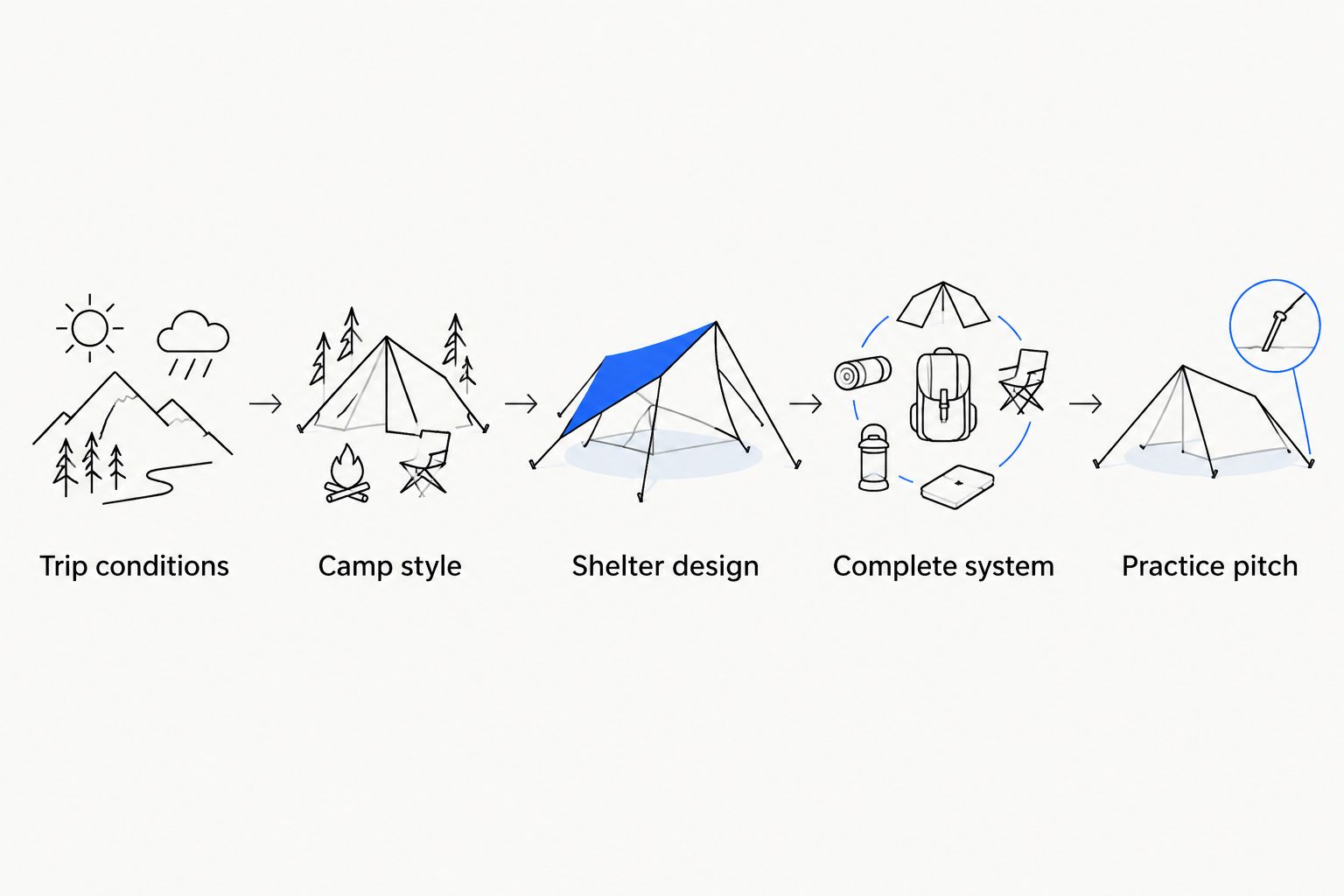
Use this sequence before choosing a specific winter camping tent:
- Trip conditions: Identify expected wind, precipitation, exposure, and the consequences of shelter failure. Check the forecast and local advisories before departure.
- Camp style: Decide between a moving camp, an extended snow camp, and a heated basecamp.
- Shelter design: Select the category that fits that camp style, then compare individual models.
- Complete system: Include the sleep system, anchors, repair supplies, and heating equipment where applicable.
- Practice pitch: Complete 1 full setup before departure using the equipment you will actually carry.
The practice pitch should expose problems, not merely prove that the tent stands. Wear gloves, organize the poles, identify the ventilation controls, and check your exit with sleeping equipment laid out. Resolve those problems at home rather than after dark in snow.
Grayman Trading Company is an outdoor-gear retailer for campers assembling shelter and survival equipment. Use that broader kit perspective: the tent is one part of the camp, not the entire protection system.
Winter setup mistakes that defeat a good tent
Closing every vent: Moisture from breathing and wet equipment remains inside the shelter. Maintain ventilation according to the tent instructions, including in cold weather.
Trusting a standing tent without anchors: Freestanding describes how the structure stands; it does not remove the need to secure it. Use anchoring methods appropriate to the ground or snow conditions.
Ignoring the ground: Water freezes at 0°C, or 32°F, under standard conditions. Cold ground and snow still require an insulating sleeping pad; a tent floor is not a substitute.
Letting snow build up: Monitor the shelter and clear accumulation safely. Keep vents, doors, and exits accessible, and follow the manufacturer's guidance rather than guessing at load limits.
Using heat to compensate for inadequate bedding: Plan for the shelter to be unheated. That applies to hot tents as well as conventional tents.
For your 2026 equipment check, inspect fabric, poles, seams, zippers, and attachment points. Repair damage before the trip and confirm that your repair supplies match the shelter materials.
How these designs are ranked
This ranking prioritizes an unheated winter sleeping shelter as the default task. Double-wall mountaineering domes take the first slot because separation from the outer wall supports that routine. Tunnel tents, hot tents, and single-wall shelters occupy distinct slots for camp layout, heating, and technical travel.
The criteria are structure, anchoring, moisture control, usable space, carry burden, and field handling. This is a design comparison, not a claim that every model within a category performs equally.
Which winter camping tent should you choose?
Choose a double-wall mountaineering dome unless your trip has a clear reason to demand another design. Move to a winter tunnel for a planned snow-camp layout, a purpose-built hot tent for an approved heated setup, or a single-wall mountaineering tent for specialized alpine requirements.
When comparing the Grayman Trading Company tent catalog, check the exact version and included components. Choose the model whose instructions, construction, and complete packed system match your trip—not the model with the most reassuring name.
FAQ
What's the best winter camping tent for general use?
A double-wall mountaineering dome is the default recommendation for unheated winter trips. Compare individual models for expected weather, usable space, anchoring, and complete packed weight.
Does a four-season tent keep you warm?
A four-season tent provides shelter, not a temperature-rated sleeping system. Your sleeping bag, insulating pad, clothing, and moisture management determine your overnight protection.
Can I use a three-season tent in winter?
A three-season tent is not a substitute for a winter shelter where the trip requires snow-load and wind-oriented construction. Choose around the expected exposure and the manufacturer's stated intended use, not the calendar alone.
Is a tunnel tent better than a dome in snow?
Neither design is automatically better in snow. Compare the specific structure, intended use, anchoring requirements, and your ability to pitch and maintain it correctly.
Should I choose a hot tent for winter backpacking?
Choose a hot tent when your trip specifically calls for an approved heated-camp system. Include the stove, chimney, fuel handling, clearances, and supervision in the decision rather than comparing tent fabric alone.
Can I heat a normal tent with a camping stove?
Do not use a cooking stove or unvented heater to heat an ordinary tent. Combustion equipment introduces carbon-monoxide and fire hazards; use heating equipment only in its approved configuration.
How do I reduce condensation in a winter tent?
Maintain the tent's intended ventilation and keep wet equipment away from bedding. Keep insulation clear of damp or frosted walls, and prevent snow from entering the sleeping compartment.
What should I check before buying a winter camping tent in 2026?
Check intended use, pole structure, ventilation, usable sleeping space, anchors, and the complete packed system. Confirm the exact version and included components, then practice pitching it before departure.
One last thing
Leave enough space to keep your sleeping bag off the tent wall. A shelter that technically accommodates your pads can still leave bulky winter insulation pressed against wet fabric or frost. Lay out the actual pads and bags during your practice pitch, then check movement and the exit.
That is the useful final buying test: not whether everything fits inside, but whether you can sleep, manage moisture, and get out without rearranging the camp.
