
Last Updated: November 19, 2026
Quick Summary
The best survival gear for 2026 is chosen by weight and reliability rather than feature count, covering water, fire, shelter, navigation, medical, light, cook, and cordage needs. Our field-tested picks include the Sawyer Micro Squeeze, Exotac nanoSTRIKER XL, KAMMOK Kuhli tarp, and Brunton TruArc 3. Build your kit around your shortest realistic scenario first, then add layers.
- The Sawyer Micro Squeeze weighs 2 oz and is rated to 100,000 gallons.
- The Exotac nanoSTRIKER XL keeps ferro rod, striker, and storage in one unit.
- The KAMMOK Kuhli tarp has 10 Hypalon-reinforced guyout points and knotless line-locks.
- Target under 10 lb for a 24-hour bag and 15-20 lb for 72 hours.
- The TOAKS CS-02 nests pot, stove, windscreen, and spork into 5.2 oz.
Table of Contents
- What Makes Survival Gear Worth Carrying in 2026
- Quick Comparison: Best Survival Gear at a Glance
- Water and Hydration: The Sawyer Micro Squeeze and Aqua Bend Bottle
- Fire Starting and Cutting Tools That Work When Wet
- Types of Survival Shelters and the KAMMOK Kuhli Tarp
- Building a Bug Out Bag Gear List by Scenario and Duration
- Best Camping Survival Kits and Emergency Gear Kits Compared
- Navigation, Lighting, and Cook Systems: The Support Gear That Matters
- Frequently Asked Questions
What Makes Survival Gear Worth Carrying in 2026
Survival gear is the equipment you carry to stay warm, hydrated, found, and medically stable when a trip goes wrong. The best survival gear for 2026 earns its place by weight and reliability, not feature count.
Most gear lists ignore an uncomfortable truth: the category is full of items carried once and never used again. What matters is gear that survives being wet, dropped, and forgotten in a pack for a season, then still works.
National Weather Service guidance on hypothermia and cold exposure
How We Evaluated This Gear
We judge gear on four criteria: does it work when wet, does it work after months of storage, does it fail gracefully, and does the weight justify the job. A fire starter that needs dry tinder is a fair-weather tool; a filter that clogs and cannot be cleaned is a one-trip tool. We favor equipment with a clear failure mode you can work around, and we are skeptical of electronics where a mechanical version would do the same job.
Quick Comparison: Best Survival Gear at a Glance
| Item | Job | Price | Why It Earns Its Place |
|---|---|---|---|
| Sawyer Micro Squeeze | Water | $33.99 | 2 oz, rated to 100,000 gallons |
| Exotac nanoSTRIKER XL | Fire | $32.95 | Self-contained, keychain size |
| KAMMOK Kuhli Tarp | Shelter | $174.95 | 10 reinforced guyout points |
| Brunton TruArc 3 | Navigation | $29.95 | No batteries, tool-free declination |
| My Medic Recon Kit | Medical | $279.95 | 200+ supplies, modular interior |
| Streamlight Wedge | Light | $142.00 | 1,000 lumens, USB-C recharge |
| TOAKS CS-02 Stove | Cook | $94.75 | 5.2 oz complete system |
| Atwood 550 Paracord | Cordage | $12.99 | 550 lb, 7-strand core |
Price
Water and Hydration: The Sawyer Micro Squeeze and Aqua Bend Bottle
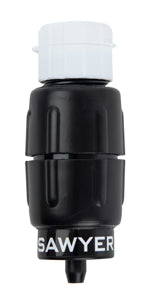
Water is the first system to fail and the first to fix. The Sawyer Micro Squeeze weighs 2 oz and carries a 0.1 micron absolute hollow fiber membrane rated to 100,000 gallons, removing bacteria, protozoa, and microplastics.
Pair it with the Mazama Aqua Bend collapsible bottle, which folds down when empty to save pack space.
You can see the Sawyer Micro Squeeze water filter or check the Aqua Bend collapsible bottle for specs and pricing.
Fire Starting and Cutting Tools That Work When Wet
Fire is where cheap gear exposes itself.
For cutting, the Silky Gomboy Pro folding saw is designed for cutting dry, hard timber, with a blade that locks in two positions and a non-slip rubber handle.
U.S. Forest Service guidance on campfire safety and dead-out procedures
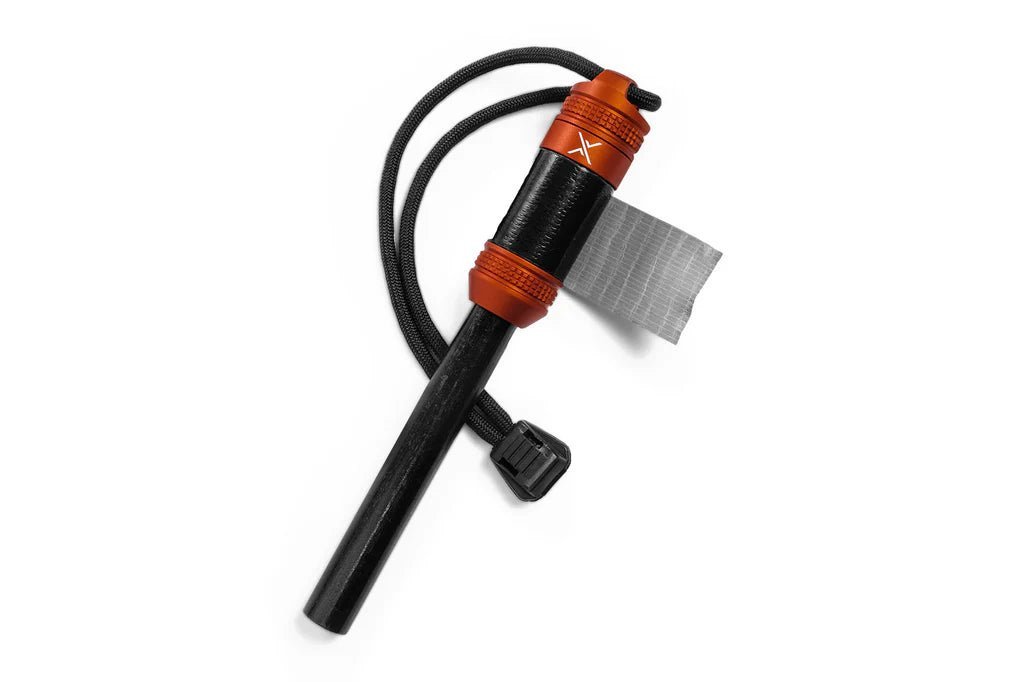
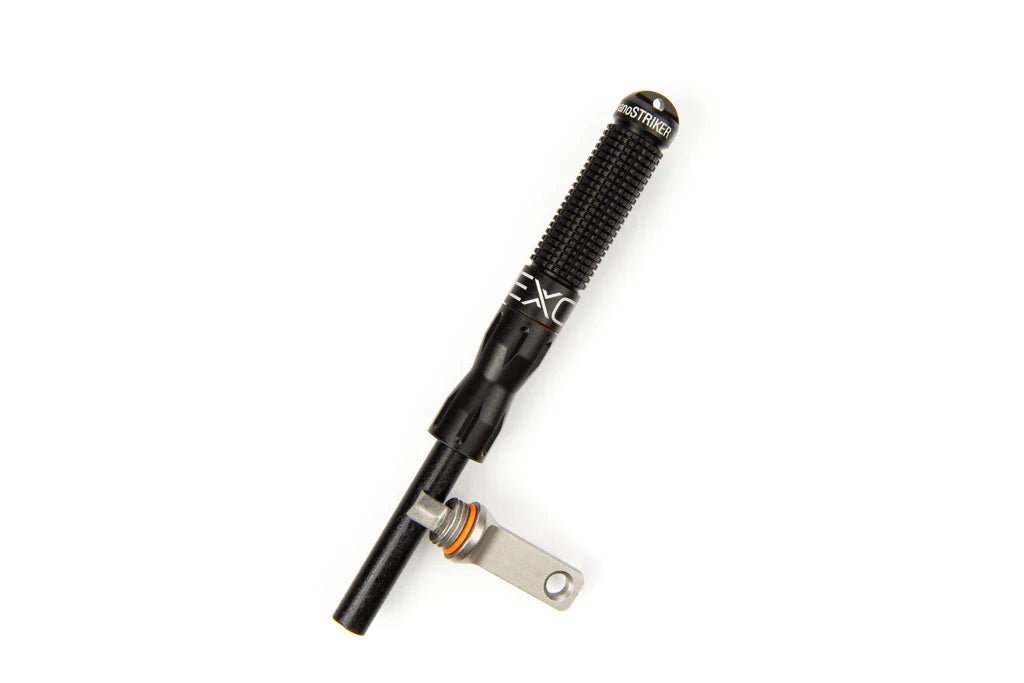
If you want a fire starter that lives on your keys, view the Exotac nanoSTRIKER XL ferro rod.
Types of Survival Shelters and the KAMMOK Kuhli Tarp
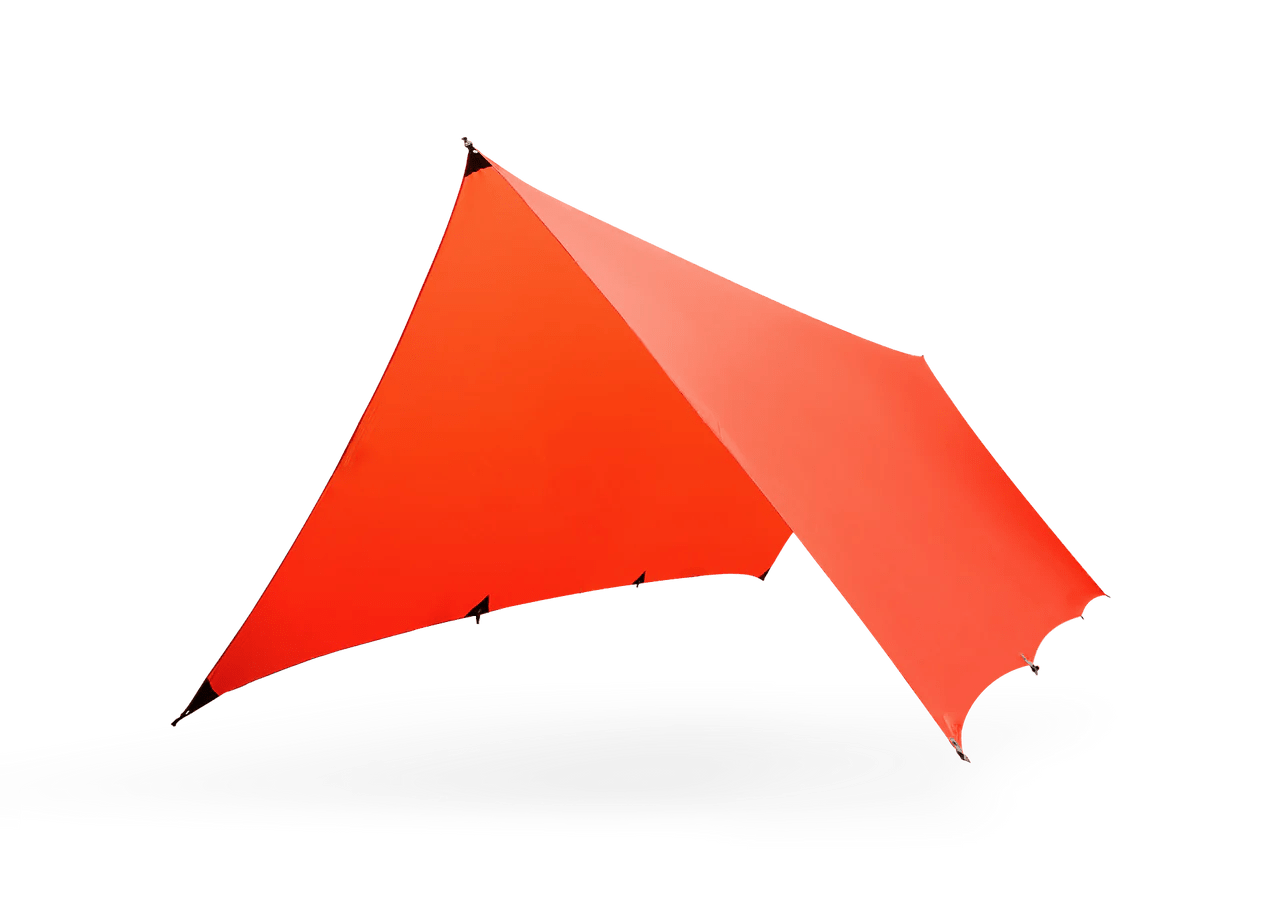
Survival shelters fall into three broad types: tarps, tents, and natural or improvised cover. Tarps win on versatility and weight, and the KAMMOK Kuhli is the strongest argument for that position. Its Patagium fabric carries Sil/PU and DWR coatings with seam seals, and 10 Hypalon-reinforced guyout points let you pitch it in a range of configurations.
Knotless line-locks mean no knots to tie in the dark.
The man is American.
Explore the KAMMOK Kuhli weather shelter to compare pitch configurations.
Building a Bug Out Bag Gear List by Scenario and Duration
A bug out bag gear list should change with duration and scenario, not wishful thinking. The most common failure is building one bag for every emergency, then discovering it is too heavy to carry five miles or too thin to last three days. Build around the shortest scenario you actually face, then add layers.
Start With the Scenario, Not the Shopping List
Four scenarios cover most real-world use, and each pulls a different loadout:
- Short-term evacuation (under 24 hours): You are leaving a home or workplace on foot or by car and expect to be indoors again within a day. The bag is a water, fire, light, and medical problem. Target under 10 lb.
- Vehicle emergency: You are stranded with the car, so weight matters less than warmth, signaling, and the ability to wait. A dedicated vehicle kit lives in the trunk and is not the same bag you carry on foot.
- Day hike gone wrong: You planned a few hours out and are now benighted. Shelter, insulation, and light do the work; food and water are secondary to staying warm and visible.
Duration Layers and Realistic Weight Targets
| Duration | Core Additions | Packed Weight Target | Approx. Packed Volume |
|---|---|---|---|
| 24 hours | Water filter, fire starter, headlamp, first aid, cordage | Under 10 lb | 15-20 L |
| 72 hours | Tarp, cook system, 3 days food, cordage, insulation | 15-20 lb | 30-40 L |
| 7 days | Full medical kit, navigation, resupply plan, extra fuel | 25-30 lb | 50-65 L |
These are starting targets, not rules. A 72-hour bag at 18 lb with a 2 lb tarp and a 5.2 oz cook system leaves room for food and water without becoming a 30 lb anchor. Weigh the bag after every shakedown; small items add up fast.
The Weight and Volume Trade-Offs That Actually Matter
Every item in a bug out bag competes for the same two resources: weight and volume. A few trade-offs decide whether the bag is carryable:
- Shelter: A tarp like the KAMMOK Kuhli covers more scenarios per ounce than a tent footprint, but it requires pitch skill and trekking poles or trees. A one-person tent is heavier and bulkier but faster to deploy in the dark.
- Water: The Sawyer Micro Squeeze at 2 oz plus a collapsible bottle replaces a hard bottle and a pump filter at a fraction of the weight. Carry at least one hard bottle anyway so you can scoop from shallow sources.
- Cook system: The TOAKS CS-02 nests pot, stove, windscreen, and spork into 5.2 oz. A larger pot adds capability but eats volume fast.
Watch out: packing for the longest scenario first is the most common way to end up with a bag you cannot carry. Build the 24-hour layer, test it on a real walk, then add the 72-hour layer only if the weight still makes sense.
Cost of a Complete Setup by Budget Tier
- Entry level (roughly $250-$400): Sawyer Squeeze, ferro rod, coated-poly tarp, basic headlamp, compact first-aid kit, baseplate compass, canister stove, and paracord. Capable, but heavier and less durable.
- Mid-range (roughly $500-$800): Sawyer Micro Squeeze, Exotac nanoSTRIKER XL, KAMMOK Kuhli tarp, Streamlight Wedge, My Medic Recon, Brunton TruArc 3, TOAKS CS-02, and Atwood 550 paracord. This is the tier most prepared households land on.
- Premium (roughly $900-$1,400): Upgraded shelter and insulation, a larger trauma-focused medical kit, redundant lighting, and a satellite communicator for off-grid signaling.
Shakedown Before You Need It
Walk a mile with the loaded pack, pitch the shelter in the dark, and start a fire with cold hands. Most people over-pack the first version and strip it down after one honest shakedown. Replace what fails the test, not what looks least impressive.
Best Camping Survival Kits and Emergency Gear Kits Compared
The best camping survival kits are the ones you can actually use under stress, and that comes down to organization as much as contents. The My Medic Recon carries over 200 supplies in a modular interior with quick-access front pockets for trauma items.
For home and vehicle kits, the logic differs. A vehicle kit prioritizes warmth, light, and signaling. A home kit prioritizes water, medical supplies, and a plan for days without power.
Ready.gov guidance on building an emergency kit
Best Survival and Emergency Gear Kits for Home and Vehicle
Home and vehicle kits should be built as separate systems, not one bag dragged between them. Keep a dedicated vehicle kit with light, warmth, and a way to signal, and a home kit with water storage, medical supplies, and backup power. Our guide to reliable emergency gear for home goes deeper on what actually works versus what fills a shelf.
FEMA guidance on emergency preparedness planning
Navigation, Lighting, and Cook Systems: The Support Gear That Matters
Support gear is where prepared people separate from equipped people. None of these items are exciting purchases, and all of them are the difference between a bad night and an emergency. The test is simple: does it work when wet, does it work after months in a pack, and does it fail in a way you can work around?
Navigation: The Brunton TruArc 3 and a Paper Backup
The Brunton TruArc 3 needs no batteries, uses a TruArc Global Needle that tilts up to 20°, and offers tool-free declination adjustment. Declination is the difference between magnetic north and true north, and getting it wrong puts you off course by miles over a long leg. Tool-free adjustment means you can set it in the field without a screwdriver.
A compass is only half a navigation system. Pair it with a paper map of the area you actually travel, folded in a waterproof sleeve, and practice taking a bearing before you need one.
Watch out: a compass stored next to a magnet or a speaker can read wrong. Keep it in its own pocket and check it against a known bearing before a trip.
Lighting: The Streamlight Wedge and Redundancy
The Streamlight Wedge puts 1,000 lumens in a flat body designed for pocket carry, recharging via USB-C in about three hours. A high setting is for signaling and searching; a low setting stretches runtime for camp tasks.
Carry two lights, not one: the Wedge as primary and a small AAA or coin-cell headlamp as backup. Batteries are the failure point in every lighting system, so store spares outside the device and check them on a schedule.
Cook Systems: The TOAKS CS-02 and Fuel Reality
The TOAKS CS-02 nests a titanium pot, alcohol stove, windscreen, and spork into 5.2 oz. The TOAKS CS-02 is made of titanium with a stainless steel stove frame, and includes a windscreen that encircles the pot.
A canister stove is faster and hotter but depends on a fuel canister you cannot refill in the field. For a 72-hour bag, either works; for cold-weather use, plan on more fuel than the label suggests and keep canisters warm inside your jacket before lighting.
Maintenance and Replacement Schedules
Support gear fails quietly. Put these checks on a calendar:
- Lighting: Test both lights monthly; replace or recharge batteries every 6-12 months depending on chemistry. Lithium cells last longer in storage than alkaline.
- Navigation: Check compass function and map currency annually, and re-check declination if you travel to a new region.
- Cook system: Inspect O-rings and stove seals yearly; replace alcohol stove gaskets if they stiffen. Clean the pot and windscreen after every trip so corrosion does not start.
Frequently Asked Questions
What survival gear should be in a basic kit?
A basic kit covers water, fire, shelter, first aid, and light. Start with a water filter like the Sawyer Micro Squeeze, a ferro rod such as the Exotac nanoSTRIKER XL, a tarp for shelter, a compact first aid kit, and a reliable flashlight. Add 550 paracord and a folding saw for shelter building and firewood. That core set handles the most common emergencies without weighing down your pack, and you can expand it as your trips get longer or conditions get harsher.
What is the best survival gear for 2026?
The best survival gear in 2026 prioritizes reliability over gadgetry. Field-tested picks include the Sawyer Micro Squeeze water filter at $33.99, the Exotac nanoSTRIKER XL ferro rod at $32.95, and the KAMMOK Kuhli weather shelter at $174.95. For medical coverage, the My Medic Recon kit at $279.95 carries over 200 supplies.
How do I choose survival gear for cold and windy conditions?
Cold and wind punish gear that relies on batteries or fragile components. Choose a shelter with reinforced guyout points, like the KAMMOK Kuhli with its ten Hypalon-reinforced anchors, so you can pitch it low and tight. Carry a ferro rod instead of matches because it sparks when wet. Layer redundancy: two fire sources, two lights, and cordage you can trust.
What are the types of survival shelters I should know?
The main types are tarps, tents, hammock systems, and improvised debris shelters. A tarp like the KAMMOK Kuhli offers multiple pitch configurations using its ten reinforced guyout points. Tents offer more enclosed protection but weigh more. Hammock systems suit wooded areas with anchor trees. Debris shelters require no gear but take hours to build. Most experienced hikers carry a tarp as primary shelter and paracord for backup rigging.
How much does a complete survival gear setup cost?
The Sawyer Micro Squeeze is $33.99, the Exotac nanoSTRIKER XL is $32.95, the Brunton TruArc 3 compass is $29.95, 550 paracord is $12.99, and the Streamlight Wedge flashlight is $142.00. Add a shelter and first aid kit and the total climbs toward $700. Buying a pre-built emergency kit can bundle the basics, but check contents against your actual scenarios before committing.

