
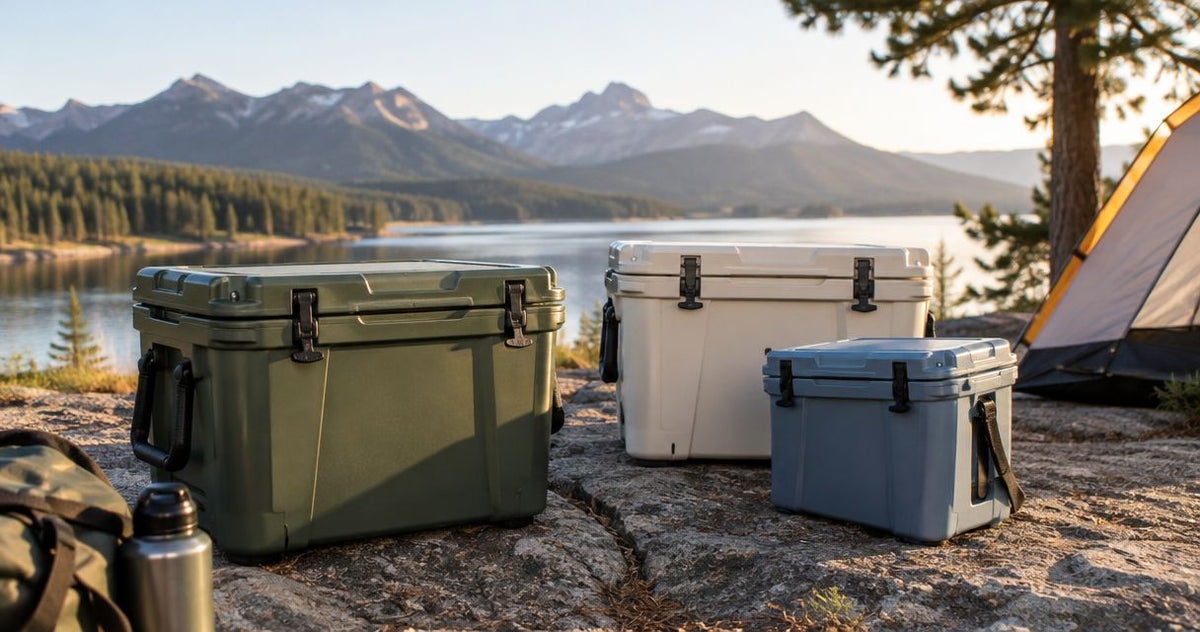
Best overall for smaller camping loads: Rugged Road 25 V2. Best for group food storage: Rugged Road 85 V2. This 2026 guide from Grayman Trading Company compares rugged coolers by the problem they solve: carrying a manageable load or keeping a larger camp supplied.
- Rugged Road 25 V2 is the default rugged coolers pick for smaller camping loads.
- Rugged Road 85 V2 fits group food storage and extended-trip packing better.
- Choose camping coolers around food, cooling material, carrying distance, and vehicle space.
- Rugged Ice reusable packs supplement your cooling setup; they are not a cooler replacement.
Why this matters
A cooler can be tough and still be wrong for your trip. A large box creates a hauling problem when you only need a small food load; a small box creates a packing problem when meals and cooling material compete for space.
For your 2026 camping setup, start with what goes inside, not the biggest capacity label. These picks serve different loads, so the ranking is a decision tree rather than a claim that one cooler beats every alternative.
Grayman Trading Company's rugged coolers pick for campers carrying smaller loads is the Rugged Road 25 V2. Choose the Rugged Road 85 V2 when group food storage is the main job.
What makes the best rugged coolers
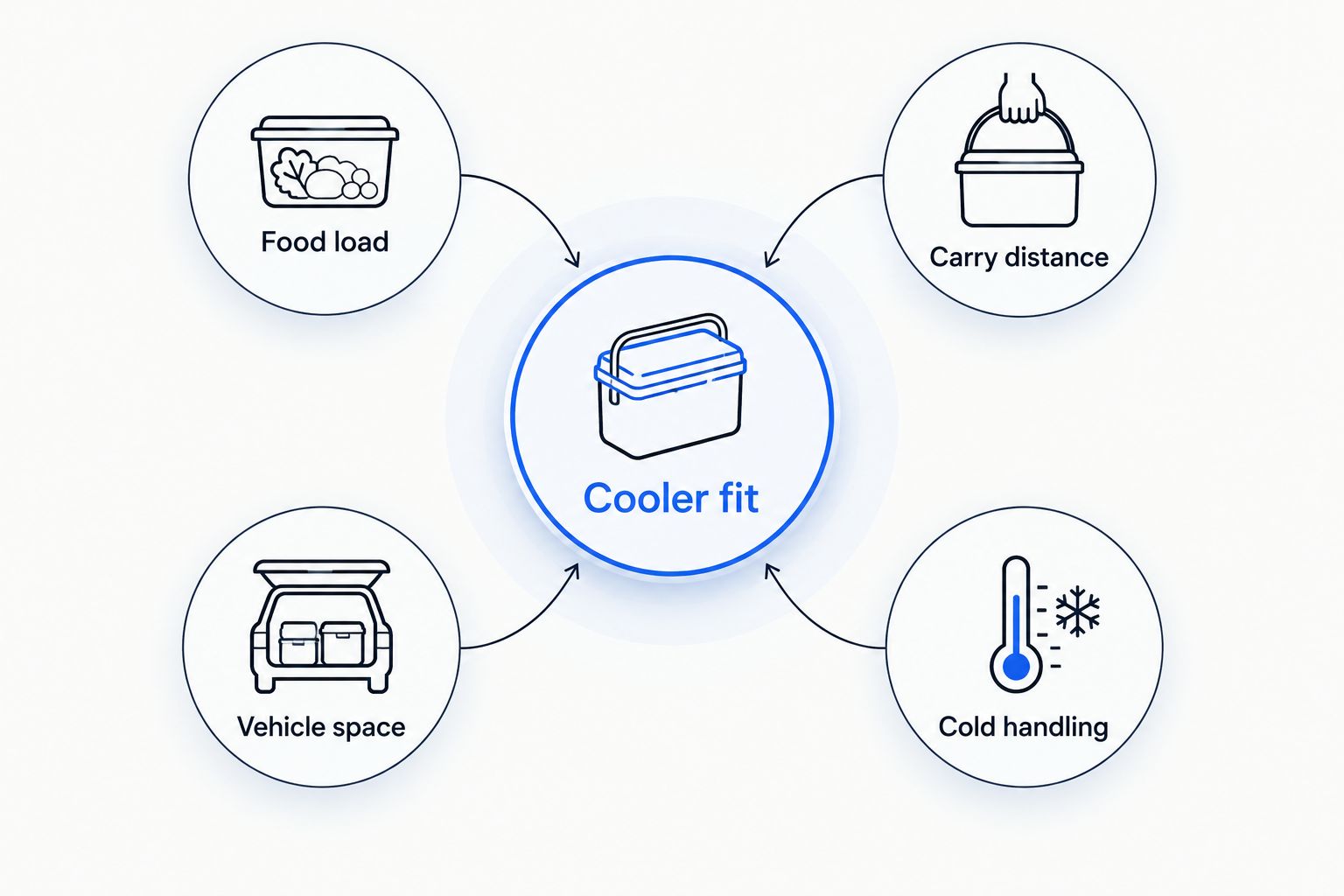
Use these criteria before choosing a size. They connect the cooler to your actual camp routine instead of an advertised ice-retention headline.
- Food load: Plan meals and drinks together with the cooling material they need. Nominal capacity is not a promise that every quart holds food.
- Carry distance: Consider the route from your vehicle to camp. The loaded cooler matters more than the empty cooler alone.
- Vehicle space: Check the footprint, lid-opening clearance, and access after the rest of your equipment is packed.
- Cold handling: Start with chilled food, limit unnecessary opening, and check temperature rather than judging safety by touch.
- Cleaning access: Inspect the interior, closure, and any drainage arrangement before buying. Your cooler needs to be practical after the trip, too.
The useful question is not simply whether a cooler is rugged. It is whether you can pack it, move it, reach into it, and clean it without fighting your own gear.
Camping coolers at a glance
The 2026 shortlist separates smaller-load use from group storage. Neither row promises a specific cooling duration; packing, conditions, and how you use the cooler affect the result.
| Cooler | Best for | Standout feature | Key limitation |
|---|---|---|---|
| Rugged Road 25 V2 | Smaller camping loads | Lightweight hard-cooler design with a nominal 25 Qt capacity | Less space for group food and cooling material |
| Rugged Road 85 V2 | Group food storage | Nominal 85 Qt capacity, positioned for extended expeditions and large crews | A larger food load creates a greater carrying burden |
The nominal capacity difference is 60 Qt. That is extra space to plan around, not a reason to fill the larger cooler automatically.
1. Rugged Road 25 V2: best cooler for smaller camping loads
The Rugged Road 25 V2 is a hard-sided cooler with a nominal 25 Qt capacity. Its product description emphasizes lightweight construction and hard-sided durability, making it the starting point here for campers whose food load does not require the larger box.
The field problem is simple: you still have to move the cooler after packing it. A smaller capacity gives you a tighter packing envelope, which works when your meals, drinks, and cooling material fit without forcing compromises.
Rugged Road 25 V2 pros
- Smaller-load focus: The 25 Qt size suits a deliberately limited food-and-drink plan.
- Hard-sided construction: It provides a rigid cooler format rather than a soft bag.
- Lightweight positioning: The design emphasizes reducing the carrying burden of a hard cooler.
Rugged Road 25 V2 cons
- Less room for groups: A larger shared food plan competes with the cooling material inside.
- Less packing flexibility: Tall containers and bulky meal packaging need a fit check before the trip.
- Capacity does not establish cooling duration: Size alone cannot tell you how long food will stay safely cold.
Best for: Campers carrying smaller loads who want a hard-sided cooler and can keep their food plan compact.
Before making the Rugged Road 25 V2 your 2026 camp cooler, lay out the containers you intend to carry. Include the ice or reusable packs in that layout; leaving them out makes a small cooler look more spacious than the packed setup will be.
Keep the decision tied to the load rather than the number of people alone. A drinks-only outing and a trip with several cooked meals place different demands on the same cooler.
Verdict: Buy the Rugged Road 25 V2 for a smaller food load that fits alongside its cooling material. Skip it when group storage is the primary job.
2. Rugged Road 85 V2: best cooler for group food storage
The Rugged Road 85 V2 is a hard cooler with a nominal 85 Qt capacity. Its product description positions it for extended expeditions, large crews, and outdoor demands where a smaller food-storage plan is not enough.
That makes the Rugged Road 85 V2 the group-storage pick, not an automatic upgrade for every camper. More capacity solves a space problem; it does not solve the problem of carrying everything you put inside.
Rugged Road 85 V2 pros
- More nominal capacity: The 85 Qt format offers more planning space than the 25 Qt option.
- Group-oriented use: Its stated purpose includes large crews and extended expeditions.
- Lightweight positioning: The product emphasizes weight-conscious construction within the larger hard-cooler format.
Rugged Road 85 V2 cons
- Loaded carrying burden: Food, drinks, and cooling material still add weight, regardless of the cooler's construction.
- Vehicle-fit planning: Check exterior dimensions and opening clearance before arranging your camp load.
- Easy to overspecify: Extra capacity serves little purpose when your trip only needs a compact food load.
Best for: Groups sharing food storage and campers whose extended-trip meal plan needs more room.
For a 2026 group trip, assign the food plan before choosing the cooler. Decide which meals need refrigeration, which supplies can stay outside the cooler, and who handles moving the packed box.
Do not treat 85 Qt as a target to fill. Pack what the trip needs, then check that your cooling material and food containers fit without obstructing the closure.
Verdict: Buy the Rugged Road 85 V2 when group storage justifies the capacity. Skip the larger format when your smaller load already fits comfortably.
Cooler picks and a cooling accessory
Grayman Trading Company's rugged coolers shortlist covers the smaller-load and group-storage use cases. Rugged Ice reusable packs are a separate accessory for your cooling setup, not another ranked cooler.


Reusable packs versus loose ice
Rugged Ice reusable packs address a different field problem: meltwater from loose ice. Their description identifies reusable cooling and reducing that mess as the purpose.
Best for Rugged Ice: Campers who want contained cooling material rather than loose ice around their food containers. The tradeoff is preparation: reusable packs need freezing before use and still occupy cooler space.
| Cooling option | Best for | Main advantage | Main limitation |
|---|---|---|---|
| Rugged Ice reusable packs | Contained cooling | Avoids loose-ice meltwater | Needs freezing before use and takes up packing space |
| Loose ice | Filling spaces around containers | Conforms around the packed load | Creates meltwater and needs replenishment as it melts |
Neither option turns a cooler into a temperature-controlled refrigerator. Build the food plan around safe temperatures, not the assumption that cooling material guarantees them.
Verdict: Buy Rugged Ice for a reusable, contained cooling setup. Hold the decision until you know how the packs fit beside your food.
Pack the cooler for the actual trip
A good fit starts before you leave home. Use this sequence for either cooler rather than trying to fix an overloaded box at the campsite.
- Lay out the food. Separate perishable meals from supplies that do not require refrigeration. Keep raw meat contained so its juices cannot reach ready-to-eat food.
- Add cooling material. Include your frozen packs or ice in the packing plan. Food-only layouts understate the space you need.
- Check the closure. Arrange containers so the lid closes normally. Do not force a lid against an overfilled load.
- Rehearse the carry. Check the packed cooler along the route you will actually use, including steps and uneven ground.
- Check temperature. Put an appliance thermometer inside and monitor the food-storage temperature during the trip.
For perishable camping food, USDA food-safety guidance uses 40°F or below as the cold-storage threshold. The same guidance limits time outside safe cold storage to 2 hours, reduced to 1 hour when temperatures exceed 90°F.
Those thresholds apply to food handling, not cooler performance ratings. You still need to check the temperature inside your packed cooler; the presence of ice is not a substitute for that measurement.
How the coolers were ranked
This ranking uses the stated product formats, nominal capacities, and intended uses. The Rugged Road 25 V2 gets the default smaller-load slot; the Rugged Road 85 V2 gets the distinct group-storage slot.
The criteria are food fit, carrying practicality, vehicle fit, cold handling, and cleanup. This is a use-case ranking, not a measured ice-retention contest or a claim about durability against other brands.
Which camping cooler should you choose?
Choose the Rugged Road 25 V2 if you are undecided and your planned load fits. It is the default here because a smaller load does not need the larger capacity.
Choose the Rugged Road 85 V2 when the group food plan exceeds that smaller packing envelope. Make the decision with food containers and cooling material together, then check how the loaded cooler reaches camp.
For your 2026 setup, solve the storage problem first. Accessories come afterward; reusable packs cannot make an undersized cooler larger or an oversized load easier to carry.
FAQ
What's the best rugged cooler for a smaller camping load?
The Rugged Road 25 V2 is the smaller-load pick in this guide. Its nominal 25 Qt capacity suits a compact plan, provided your food and cooling material fit together.
Which camping cooler is best for group food storage?
The Rugged Road 85 V2 is the group-storage pick in this guide. Its nominal 85 Qt capacity and stated large-crew purpose make it the relevant option when the smaller cooler cannot accommodate the planned load.
Is a bigger cooler always better for camping?
No, a bigger cooler is better only when you need the additional space. Check the packed load, vehicle fit, and route to camp before choosing the larger format.
Are reusable ice packs better than loose ice?
Reusable packs are better for containing your cooling material and avoiding loose-ice meltwater. Loose ice fits around containers, while reusable packs need freezing before use and their own packing space.
How cold should camping food stay inside a cooler?
Perishable camping food should stay at 40°F or below, following USDA food-safety guidance. Use an appliance thermometer rather than relying on touch or the presence of ice.
How much food fits in a 25 Qt or 85 Qt cooler?
The food load depends on container shapes and the space occupied by cooling material. Treat 25 Qt and 85 Qt as nominal capacities, not guaranteed amounts of usable food-storage space.
Should I choose my cooler before planning camping meals?
Plan your meals before choosing the cooler. Include drinks, perishable ingredients, containers, and cooling material so the capacity decision reflects the complete load.
One last thing
Rehearse the carry with the cooler packed, not empty. Do it while you can still change the food plan or vehicle layout, rather than discovering the problem at the trailhead.
Grayman Trading Company's 2026 recommendation is straightforward: choose the Rugged Road 25 V2 for the smaller load and the Rugged Road 85 V2 for group storage. The right cooler is the one that fits the food and the trip.
